Table of Contents
ToggleWallpaper has reclaimed its place as a powerhouse design tool, offering the fastest way to overhaul a room’s entire personality without swinging a sledgehammer. Unlike paint, which delivers flat color, wallpaper brings pattern, texture, and visual depth that can fix proportion problems, add warmth, or inject drama into bland builder-grade boxes. The options in 2026 range from photo-realistic murals to grass-cloth textures that play with light. Whether tackling a powder room accent wall or wrapping an entire primary bedroom, choosing the right design requires understanding scale, repeat patterns, and how the material performs in real-world conditions. This guide walks through six trending wallpaper categories that deliver impact, plus practical notes on application and prep.
Key Takeaways
- Wallpaper design ideas now span from bold geometric patterns and nature-inspired themes to textured finishes and minimalist styles, each offering distinct ways to transform a room’s personality without major renovations.
- Match wallpaper pattern scale to room dimensions—large 24-inch repeats suit spacious areas while 4- to 6-inch geometrics work better in tight spaces like powder rooms or closets.
- Proper wall preparation and precise installation, including priming, plumb lines, and correct adhesive selection, are essential to prevent visible flaws and ensure long-lasting results.
- High-moisture areas like bathrooms and kitchens require moisture-rated vinyl or vinyl-coated wallpaper to prevent peeling and mildew, while textured designs excel at hiding drywall imperfections.
- Accent walls provide maximum visual impact with minimal material cost and commitment, especially when applied to architectural features like chimney breasts or niche spaces.
- Order 15–25% extra material beyond calculated coverage to account for pattern-matching waste and future touch-ups, as dye lots vary between production runs.
Bold Geometric Patterns That Make a Statement
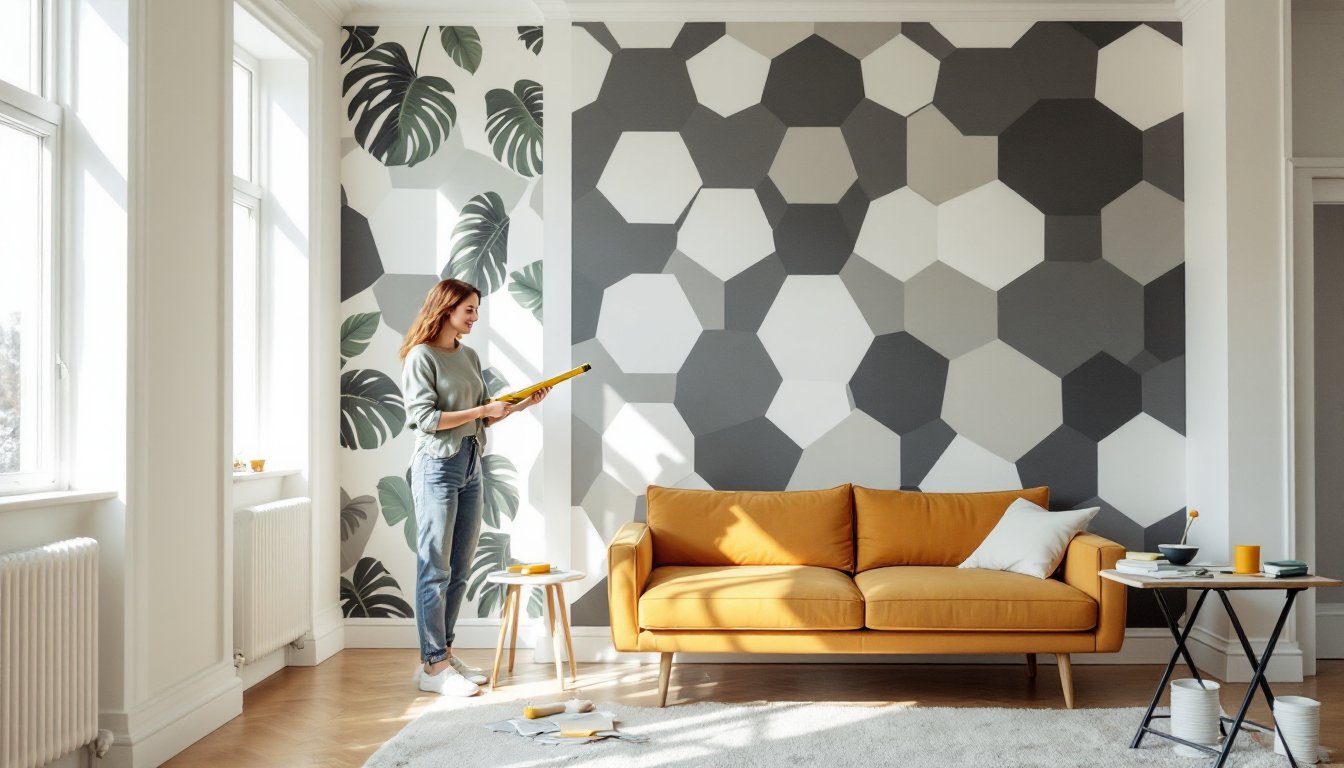
Geometric wallpaper, think hexagons, chevrons, Moroccan trellis, or oversized grid patterns, works best in spaces where you want architectural interest without actual millwork. These designs create optical effects: vertical lines stretch ceiling height, while large-scale repeats can make a narrow hallway feel wider.
Key considerations: Match the pattern scale to room size. A 24-inch hexagon repeat overwhelms a powder room but looks sharp in a dining room with 9-foot ceilings. Smaller 4- to 6-inch geometric repeats suit tight spaces like laundry rooms or closets. Dark geometrics on light backgrounds hide seams better than the reverse.
Material choice matters. Peel-and-stick geometric wallpaper simplifies DIY installation and removal, ideal for renters or commitment-phobes. Traditional pre-pasted or unpasted vinyl-coated paper offers better durability in high-traffic areas and hides wall imperfections more effectively than thinner peel-and-stick options. Always prime walls with acrylic primer before hanging any wallpaper to ensure even adhesion and easier future removal.
Installation tip: Geometric patterns demand precise plumb lines. Use a laser level or 4-foot carpenter’s level to mark your first strip: even a half-degree drift compounds across a 12-foot wall, throwing the pattern visibly out of square. Pros often snap a chalk line for the first strip, especially with large-scale repeats that magnify alignment errors.
Nature-Inspired Wallpaper for a Calming Retreat
Nature-themed wallpaper ranges from photorealistic forest murals to abstracted leaf silhouettes, all designed to bring biophilic elements indoors. These designs lower visual temperature in a room, useful in sun-drenched spaces or homes with a lot of hard surfaces like tile and stainless steel.
Color psychology plays a role here. Greens and blues slow heart rate and work well in bedrooms, bathrooms, and home offices where focus and calm matter. Warmer earth tones, rust, terracotta, sage, add coziness to living rooms and dining areas without the heaviness of saturated jewel tones.
Durability check: Bathrooms and kitchens need vinyl or vinyl-coated wallpaper rated for moisture exposure. Standard paper-backed designs will peel or mildew in high-humidity zones. Look for scrubbable ratings if installing near sinks or in kids’ rooms.
Botanical Prints and Tropical Themes
Botanical prints, oversized palm fronds, monstera leaves, or delicate ferns, deliver instant drama and pair well with mid-century modern and coastal design schemes. Tropical themes work best as accent walls rather than full-room applications: wrapping every wall in banana leaves can veer into tiki-bar territory fast.
Scale and proportion: A 6-foot palm frond repeat suits a primary bedroom or living room with 8- to 10-foot ceilings. Smaller botanical motifs (4- to 8-inch repeats) fit better in breakfast nooks or hallways. Match the dominant color in the wallpaper to existing upholstery or trim to keep the room cohesive.
Lighting matters. Dark botanical designs absorb light: factor this in if your room lacks natural light or relies on a single overhead fixture. Many professionals find curated wallpaper collections helpful for visualizing how patterns perform under different lighting conditions.
Textured Wallpaper Designs for Added Dimension
Textured wallpaper, grasscloth, linen weave, faux brick, beadboard, or embossed plaster, adds tactile dimension that paint can’t match. It’s particularly effective for hiding drywall flaws: the three-dimensional surface breaks up light and shadow, masking taped seams, old nail pops, or orange-peel texture.
Grasscloth and natural fibers deliver high-end looks but come with tradeoffs. Real grasscloth is fragile, shows seams prominently, and can’t be scrubbed clean, reserve it for low-traffic spaces like formal dining rooms or primary bedrooms. Vinyl grasscloth imitations offer similar texture with better durability and stain resistance, though they lack the subtle color variation of genuine natural fiber.
Embossed and paintable textures give flexibility. Products like anaglypta or expanded vinyl can be installed then painted to match trim color, creating wainscoting or coffered-ceiling effects without carpentry. Use heavy-duty wallpaper adhesive (not standard pre-paste) for textured papers over 20 oz per square yard: the extra weight demands stronger bond strength.
Prep is non-negotiable. Textured wallpaper telegraphs every surface flaw. Fill nail holes and cracks with joint compound, sand smooth with 120-grit paper, then apply acrylic primer. Skip this, and you’ll see every defect shadowing through the texture. Working with interior design trends often means balancing aesthetic goals with practical surface preparation requirements.
Vintage and Retro Wallpaper Styles Making a Comeback
Retro wallpaper, 1970s geometric sunbursts, Art Deco fan patterns, Victorian damask, or mid-century atomic motifs, brings nostalgic character that pairs surprisingly well with modern furnishings. The key is treating vintage patterns as the room’s focal point and keeping everything else restrained.
Color palette updates matter. Authentic 1970s harvest gold and avocado green rarely translate well today. Look for vintage-inspired designs that use modern colorways: muted blush, charcoal, navy, or crisp black-and-white instead of period-accurate shades that date the space.
Mixing eras works if you follow one rule: match the pattern scale and color intensity. A bold 1920s Art Deco geometric can coexist with sleek contemporary furniture if both share a similar visual weight. Pair delicate Victorian florals with equally refined furnishings, not chunky industrial pieces.
Sourcing authentic vintage wallpaper requires patience and realistic expectations. Deadstock rolls often have color shifts, edge damage, or insufficient yardage for whole rooms. Reproduction wallpapers from specialty suppliers offer period accuracy with consistent dye lots and full rolls. Calculate coverage carefully: vintage patterns often come in European roll sizes (approximately 21 inches wide by 33 feet long) rather than standard American 20.5 inches by 33 feet, affecting seam placement and waste.
Modern Minimalist Wallpaper Ideas
Minimalist wallpaper seems contradictory, why add pattern to a style defined by restraint? But subtle textures, tonal patterns, and monochromatic designs enhance minimalist spaces without cluttering them visually. Think fine linen textures, barely-there geometric grids, or soft ombré gradients.
Texture over pattern defines modern minimalist wallpaper. Solid-color grasscloth, linen weaves, or silk-screened plasters add richness while maintaining clean lines. These work especially well behind floating shelves or gallery walls, providing depth without competing for attention.
Monochromatic schemes keep things grounded. White-on-white patterns, gray tonal geometrics, or soft taupe textures blend with Scandinavian, Japanese, and contemporary design aesthetics. The wallpaper becomes architectural rather than decorative, a subtle shift that elevates rather than decorates.
Installation precision matters more here. Minimalist spaces lack visual clutter that might hide installation flaws. Crooked seams, pattern mismatches, or visible adhesive show immediately against sparse furnishings and clean walls. Use a 48-inch level for plumb lines, a seam roller for tight joints, and a clean damp sponge to immediately wipe away any adhesive squeeze-out. Many homeowners exploring fresh interior design ideas gravitate toward these understated wallpaper options as low-risk updates.
Creative Accent Wall Applications
Accent walls concentrate pattern and color in a single plane, delivering maximum impact with minimum commitment and material cost. Strategic placement matters: choose the wall your eye hits first when entering the room, typically the wall behind a bed, sofa, or fireplace.
Architectural features guide decisions. Wallpaper a chimney breast, the inside of built-in shelving, or the wall behind open staircase risers to highlight existing structure. Avoid wallpapering the only wall with windows unless you want to emphasize an awkward layout: the broken plane rarely looks intentional.
Ceiling wallpaper creates unexpected dimension, especially in rooms with low ceilings where vertical pattern would emphasize the problem. Light-colored patterns with small repeats work best overhead, dark or large-scale patterns make ceilings feel lower. Use clear wallpaper adhesive rather than white: drips are less visible on ceilings, and you’re working against gravity.
Niche and alcove treatments turn architectural quirks into features. Wallpapering shallow recesses, the back wall of closets with removed doors, or powder room niches adds surprise color without overwhelming small spaces. These applications typically require less than two rolls, making them perfect testing grounds for bold patterns you wouldn’t commit to full-room.
Safety note: Always wear safety glasses and a dust mask when sanding walls during prep, and ensure adequate ventilation when working with adhesives, many contain VOCs that require air circulation. Design resources like Home Bunch showcase numerous accent wall treatments across different home styles, though always adapt ideas to your specific room proportions and existing finishes. Homeowners following current design trends often start with a single accent wall before committing to larger installations.
Pro tip: Order an extra roll beyond calculated coverage. Dye lots vary between production runs, and pattern-matching complex designs generates 15-25% waste depending on repeat size. Having backup material beats trying to source a matching roll months later when touch-ups are needed. Some design enthusiasts reference styling guides for room coordination advice, though practical installation experience trumps inspiration photos every time.