Table of Contents
ToggleThe right window can turn a cramped, dark kitchen into a space that feels open, airy, and genuinely pleasant to work in. Kitchen windows do more than frame a view, they dictate how much natural light floods the room, whether there’s ventilation during summer cooking marathons, and even how the layout functions day-to-day. Picking the wrong style or placement can leave a kitchen feeling claustrophobic or oddly proportioned, while the right choice transforms the entire vibe. This guide breaks down practical window design options for kitchens in 2026, covering everything from structural considerations to finishing touches that tie the look together.
Key Takeaways
- Kitchen window design impacts natural light, ventilation, energy efficiency, and workflow, making proper placement and style critical to both functionality and resale value.
- Bay and bow windows create inviting breakfast nooks and add square footage but require structural support, permits, and higher upfront costs than standard windows.
- Large picture windows maximize natural light and offer better insulation than operable windows, but must be paired with separate ventilation sources to meet building code requirements.
- Garden windows above the sink bring plants and light into the kitchen while maintaining a functional workspace, though they require careful flashing and can produce heat gain in summer.
- Alternative window placements on perpendicular walls or island sinks can free up cabinetry space and create more open floor plans, especially in modern kitchen layouts.
- Moisture-resistant window treatments like faux wood blinds, cellular shades, and corrosion-resistant hardware ensure kitchen windows stay clean and functional in high-humidity environments.
Why Kitchen Window Design Matters More Than You Think
Windows aren’t just openings in walls, they’re load-bearing decisions that affect light, workflow, and resale value. A poorly placed window can block upper cabinet runs or create awkward dead zones in counter space. Conversely, a well-planned window becomes the kitchen’s focal point and can even reduce reliance on artificial lighting during daylight hours.
Natural light makes color accuracy easier when prepping food, reduces eye strain, and has been shown to improve mood during daily tasks. Ventilation matters too, operable windows help clear cooking odors, steam, and heat without relying solely on a range hood. In many jurisdictions, the International Residential Code (IRC) requires habitable rooms to have natural light and ventilation, typically calculated as a percentage of floor area. Kitchens often fall into this category, so check local building codes before framing changes.
Window size and style also impact energy efficiency. Larger expanses of glass can increase heat gain in summer and loss in winter unless they’re spec’d with low-E coatings and proper U-factors for the climate zone. Double-hung, casement, and fixed windows all have different performance profiles, casements typically seal tighter when closed, while double-hungs offer flexible ventilation control.
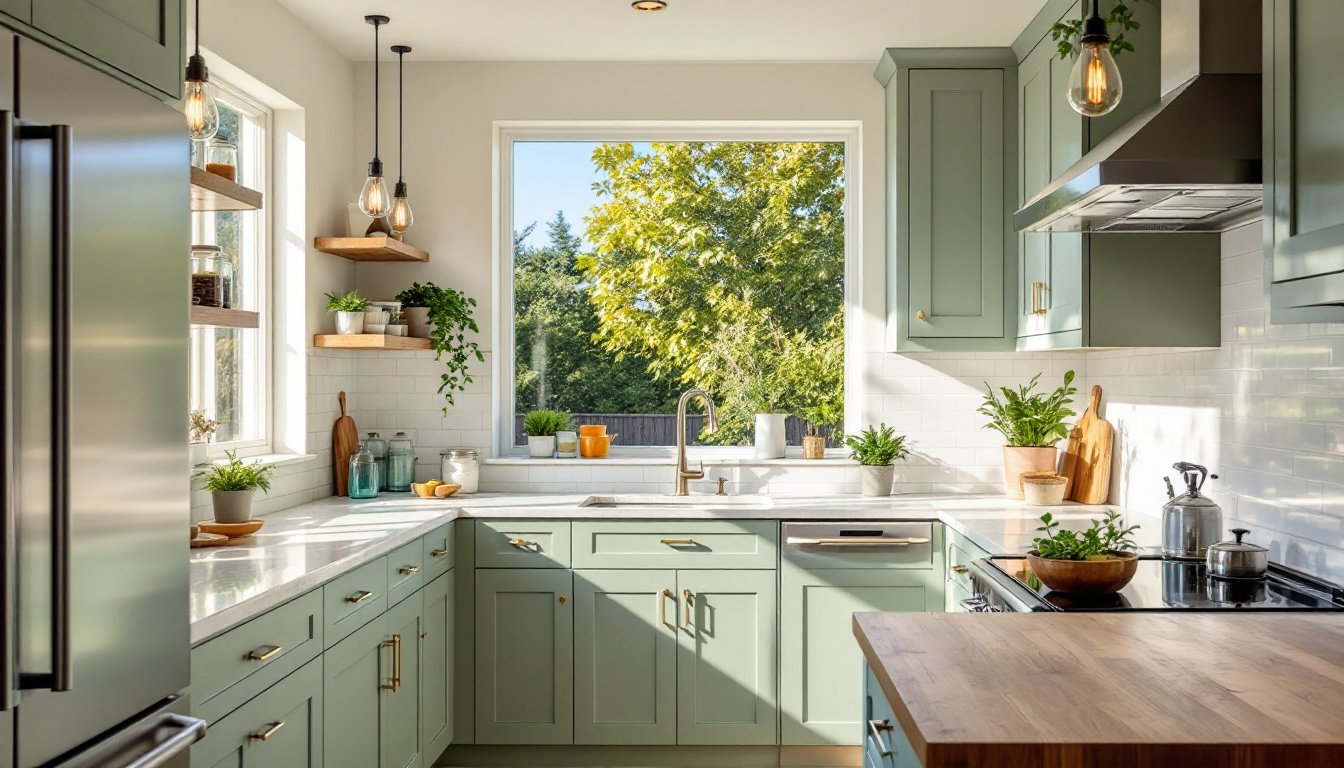
Finally, window placement influences how the kitchen flows. Traditional wisdom puts a window over the sink to make dishwashing less tedious and provide a view. But modern kitchens with islands or peninsula layouts sometimes benefit from windows on adjacent walls, freeing up sink-wall space for cabinetry or open shelving.
Bay and Bow Windows: Creating a Cozy Breakfast Nook
Bay and bow windows project outward from the exterior wall, adding usable square footage and creating a natural alcove inside. A bay window typically has three panels, a large center pane flanked by two angled side windows, while a bow window uses four to six panels arranged in a gentle curve. Both styles work well when there’s room on the exterior and the goal is a built-in seating or dining area.
Structurally, these aren’t simple swaps. Bay and bow windows require support underneath, either cantilevered framing or a dedicated foundation extension like a knee wall or brackets. The roof often needs flashing and weatherproofing details that go beyond standard window installation. Most homeowners hire a contractor for this work, and it typically requires a building permit since it alters the building envelope and may involve structural changes.
Inside, the alcove created by a bay or bow window is perfect for a breakfast nook with built-in bench seating or a small table. The angled side panels can be operable casements, adding cross-ventilation. Measure carefully, these windows add 12 to 18 inches of depth on average, so ensure there’s clearance from walkways, appliances, or adjacent structures outside.
Cost runs higher than flat windows due to size, complexity, and installation labor. Expect to budget for custom trim, interior finishing, and possibly new cabinetry or seating to complete the nook. If the kitchen connects to a patio or garden view, many homeowners find design inspiration from spaces that blend indoor and outdoor elements. The investment pays off in both functionality and curb appeal, bay and bow windows are consistently popular with buyers.
Large Picture Windows for Maximum Natural Light
Picture windows are fixed panes, no moving parts, no screens, just glass and a frame. They’re ideal when the priority is flooding the kitchen with daylight and showcasing an unobstructed view. Because they don’t open, they offer better insulation and weather resistance than operable windows of the same size, and they’re generally less expensive per square foot.
The downside is ventilation. If a picture window is the only window in the kitchen, it won’t meet code in most areas. Pair it with flanking casements, awnings, or a separate operable window nearby to satisfy ventilation requirements and provide airflow. A common setup is a large central picture window with smaller casement windows on each side, maximum light, plus the ability to catch a breeze.
Picture windows work best on walls without upper cabinets. If the wall is load-bearing, a structural header will be required to carry the load above the opening. The header size depends on the span and load, consult local building codes and consider hiring an engineer if the opening exceeds 6 feet in width. This is structural work, not cosmetic, and it requires a permit in most jurisdictions.
Frame material affects both performance and aesthetics. Vinyl is low-maintenance and budget-friendly, but it can’t be painted. Wood-clad windows offer a traditional interior look with durable exterior cladding. Fiberglass resists expansion and contraction better than vinyl, making it a solid choice in climates with wide temperature swings. Homeowners exploring renovation strategies often weigh material longevity against upfront cost.
For glare control and UV protection, consider specifying low-E glass or adding cellular shades that can be lowered during peak sun hours without blocking the view entirely.
Garden Windows: Bringing the Outdoors In
Garden windows are miniature greenhouses that project outward from the wall, typically 12 to 16 inches. They have glass on all sides, top, bottom, and sides, plus shelves inside for plants, herbs, or decorative items. They’re most commonly installed above the sink, turning a functional spot into a display area and light source.
Installation is simpler than a bay window but still requires careful flashing and sealing. The unit mounts into a standard rough opening, usually 24 to 48 inches wide, and projects out past the exterior sheathing. Because of the full glass surround, garden windows capture light from multiple angles throughout the day. The downside is heat gain, all that glass can make the space warm in summer, and condensation can build up if the kitchen produces a lot of steam.
Most garden windows include operable side vents for airflow and to prevent overheating. Check whether the unit comes with screens, bugs are drawn to light and moisture, especially if herbs are growing inside. The shelves are usually tempered glass or acrylic: avoid overloading them. They’re designed for lightweight pots and decor, not heavy cookware.
Garden windows don’t suit every style. They lean traditional or cottage-inspired, so they can look out of place in minimalist or industrial kitchens. For modern spaces, a flush-mount window with internal shelving or a sleek plant ledge might be a better fit. Resources like The Kitchn often feature examples of how different window styles align with kitchen aesthetics.
Cost is moderate, higher than a standard double-hung but less than a full bay. Installation is a one-day job for an experienced carpenter, though flashing and trim work require attention to detail to avoid leaks.
Window Placement Above the Sink vs. Alternative Locations
The window-over-the-sink layout is a classic for good reason: it provides a view during repetitive tasks and centers the sink on the wall for balanced plumbing runs. But it’s not the only option, and in some kitchens, it’s not even the best one.
Alternatives include placing the window on a perpendicular wall to open up space for a backsplash, open shelving, or a larger upper cabinet run above the sink. This works especially well in galley kitchens where one wall faces an interior room and the opposite wall has exterior exposure. Another option is a tall, narrow window flanking the sink rather than directly above it, maintains the view and light without interrupting cabinet height.
Island or peninsula layouts sometimes eliminate the sink-wall window entirely. Instead, the sink goes in the island with a view into the living or dining area, while the perimeter wall gets a large picture window or patio door. This setup maximizes natural light and creates a more open floor plan, though it requires careful plumbing planning, venting an island sink can be tricky and may need an air admittance valve (AAV) if traditional venting isn’t feasible. Check local plumbing codes: some jurisdictions restrict AAV use.
Corner sinks paired with angled windows or wraparound glass can make awkward corners feel intentional and light-filled. Skylights or roof windows are another option if the kitchen is on the top floor and wall space is limited. Tubular skylights bring daylight into windowless zones without the structural complexity of a full skylight.
When deciding placement, think about sightlines, cabinet layout, and whether the window will interfere with a range hood, upper cabinets, or tile work. Homeowners pursuing broader home renovation projects often find that rethinking window placement unlocks better layouts and more functional storage.
Window Treatments and Hardware That Complement Your Kitchen Style
Kitchen windows need treatments that handle moisture, grease, and frequent adjustments without looking dingy after six months. Fabric curtains can work, but they need regular laundering. Better options include materials designed for high-humidity, high-use environments.
Faux wood blinds resist warping and are easy to wipe clean. They come in 1-inch, 2-inch, and 2.5-inch slat widths, larger slats suit bigger windows and modern styles, while narrower slats fit traditional or cottage aesthetics. Cellular shades offer good insulation and light control, with options for top-down/bottom-up operation that lets in light while maintaining privacy. For a cleaner look, consider shades mounted inside the window casing rather than outside.
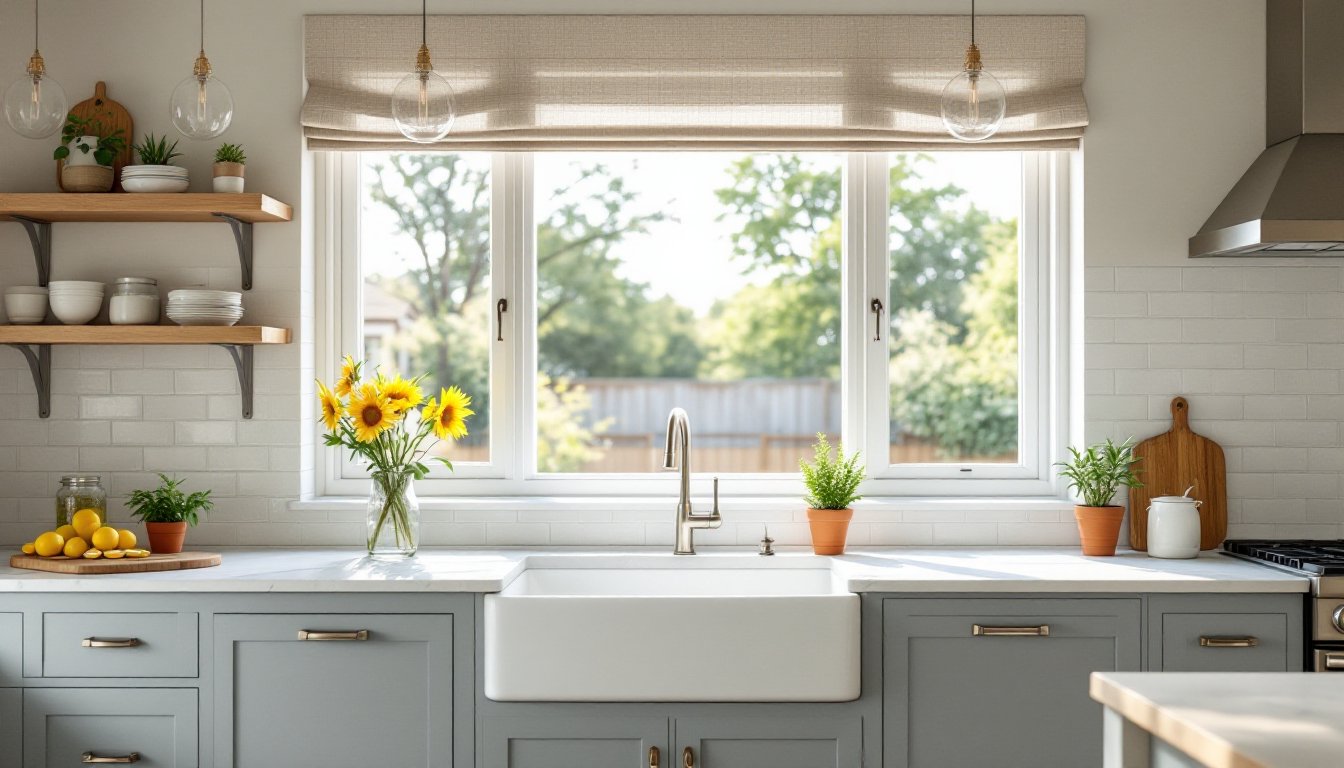
Café curtains cover the lower half of the window, preserving privacy without blocking upper light. They’re classic in farmhouse and French country kitchens. Roman shades in moisture-resistant fabric or vinyl add softness without the fuss of full drapes. Avoid treatments that hang too close to the cooktop or sink, they’re a grease magnet and a potential fire hazard near open flames.
Hardware should be corrosion-resistant. Stainless steel or brushed nickel rods and finials hold up better than painted steel, which can rust in humid conditions. If the window is above the sink, mount hardware high and out of the splash zone.
For minimalist or contemporary kitchens, skip treatments altogether on picture windows or use motorized roller shades that disappear into a valance. Homeowners interested in coordinating interior design choices often select hardware finishes that match cabinet pulls, faucets, and lighting fixtures for a cohesive look.
Privacy films and frosted glass are permanent, low-maintenance alternatives in urban settings or where the window faces a neighbor’s wall. They diffuse light without the need for daily adjustments. Collections like those featured on Remodelista showcase a range of hardware and treatment styles suited to different kitchen personalities.
Conclusion
Choosing the right kitchen window involves balancing light, ventilation, layout, and style, not just picking what looks good in a magazine. Whether it’s a classic sink window, a light-flooding picture pane, or a cozy bay nook, the best design serves how the kitchen actually gets used. Plan for structure, code compliance, and long-term maintenance, and the window will do more than brighten the space, it’ll become one of the kitchen’s most valuable features.