Table of Contents
ToggleModern master bedroom design strips away the excess and focuses on what actually matters: clean lines, intentional materials, and space that lets you breathe. It’s not about following a catalog look or cramming in trendy pieces. Instead, it’s about building a room that feels calm, functional, and unmistakably yours. Whether you’re working with a generous primary suite or a standard 12×14 space, the principles stay the same, simplicity, quality, and thoughtful choices. This guide walks through the design elements that define modern bedrooms in 2026, from color and material selection to lighting strategies and storage solutions that won’t clutter your sightlines.
Key Takeaways
- Modern master bedroom design prioritizes clean lines, natural materials, and functional simplicity over trendy pieces, creating a calm and intentional space regardless of room size.
- A neutral color base (white, gray, beige, or taupe) paired with one or two accent colors through bedding or artwork provides the visual calm that defines this design style.
- Low-profile furniture with simple silhouettes—such as platform beds, minimal nightstands, and low dressers—makes ceilings feel taller and prevents the room from feeling heavy.
- Layered lighting combining ambient ceiling fixtures, task lighting at bedside, and accent lights highlighting architectural features creates flexibility and depth without clutter.
- Smart storage solutions like built-in shelving, under-bed drawers, and furniture with hidden compartments keep modern bedrooms organized while maintaining clean sightlines.
- Texture through bedding, rugs, and wall finishes (limewash, grasscloth, or plaster) adds warmth and depth to neutral palettes without introducing pattern or visual chaos.
What Defines Modern Master Bedroom Design?
Modern design isn’t minimalism taken to an extreme, and it’s not cold or sterile when done right. The style centers on simplicity, functionality, and honest materials. You won’t find ornate crown molding or heavy drapes here. Instead, expect flat-panel cabinetry, low-profile furniture, and architectural details that serve a purpose.
Key characteristics include horizontal lines that visually expand the room, neutral base palettes punctuated by one or two accent colors, and an emphasis on natural light. Materials lean toward wood (especially walnut, oak, and teak), metal (brushed nickel, matte black, or brass), concrete, and glass. Textures matter, wool throws, linen bedding, and sisal rugs add warmth without visual clutter.
Modern bedrooms also reject symmetry as a hard rule. A single nightstand paired with a wall-mounted reading lamp can work better than forcing matching furniture into an awkward layout. The goal is visual balance, not mirror images. If you’re dealing with structural limitations, a window off-center, an angled ceiling, or a radiator you can’t move, modern design gives you permission to work with it rather than hide it.
Minimalist Color Palettes and Material Choices
Start with a neutral base: white, gray, beige, or taupe on walls and ceiling. These aren’t boring choices, they’re the foundation that lets everything else register. Benjamin Moore’s Simply White (OC-117) and Sherwin-Williams’ Repose Gray (SW 7015) remain popular for good reason. Both have enough warmth to avoid feeling clinical.
Once your base is set, introduce one or two accent colors through bedding, artwork, or an upholstered headboard. Deep charcoal, navy, terracotta, or sage green work well. Avoid the temptation to layer multiple accent colors, it muddies the visual calm modern design relies on.
Material selection separates good modern bedrooms from flat ones. Use natural wood for flooring or a feature wall. If you’re installing new flooring, engineered hardwood in 5- to 7-inch planks (oak or walnut) offers stability and a high-end look without solid hardwood’s moisture sensitivity. For accent walls, consider board-and-batten installed horizontally or a single wall in textured plaster. Both add dimension without pattern.
Metal finishes should stay consistent. Pick matte black, brushed nickel, or unlacquered brass and use it across light fixtures, cabinet pulls, and curtain rods. Mixing metals works in some design styles but rarely in modern bedrooms, where consistency reinforces the clean aesthetic. Pairing contemporary interior design techniques with material restraint delivers the most impact.
Strategic Furniture Selection and Layout
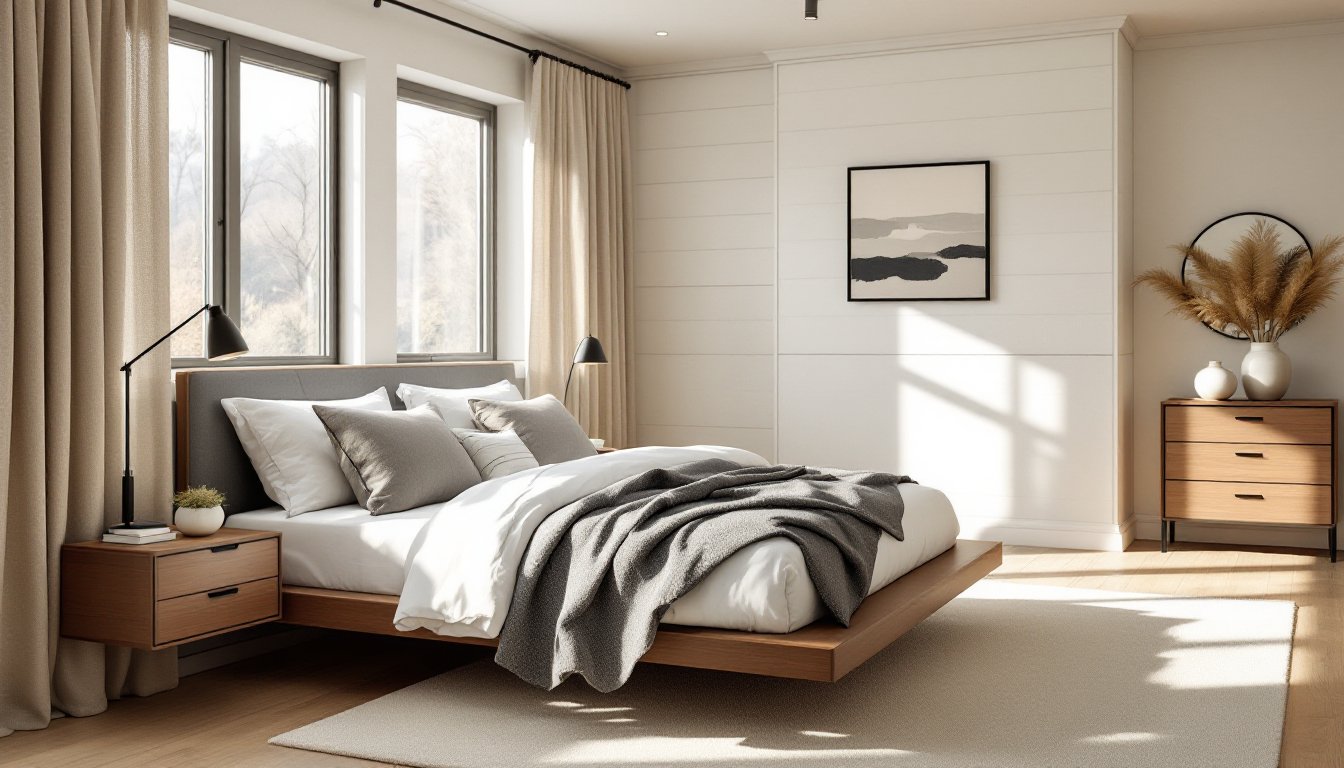
Modern bedrooms need low-profile furniture with simple silhouettes. Platform beds work best, no box spring needed, and the lower height makes ceilings feel taller. Look for beds with integrated side rails or a floating frame that leaves visible floor space underneath. That visual gap matters: it keeps the room from feeling grounded and heavy.
Nightstands should be proportional but not necessarily matching. A single floating shelf on one side with a narrow three-drawer unit on the other can work if both share similar finishes. Keep nightstand height within 2–4 inches of your mattress top for functional reach.
Skip the dresser-and-mirror combo. Instead, choose a single low dresser (around 30 inches tall) or a tall narrow chest if floor space is tight. Mount a frameless or thin-framed mirror above it, or skip the bedroom mirror entirely if you have one in an adjacent bath. Oversized mirrors leaning against a wall work in modern spaces, but they need at least 8 feet of clear wall and secure anchoring, lean-to mirrors over 40 pounds should be strapped to studs with furniture anchors to meet basic safety standards.
Layout matters more than furniture count. Leave at least 30 inches of clearance on each side of the bed for comfortable movement. If your room is narrow, float the bed away from the wall and use the space behind it for a low console or even a workspace. This works especially well in bedrooms that double as home offices. Exploring modern design strategies can help optimize tight or awkward floor plans.
Lighting Design for Modern Bedrooms
Modern bedrooms use layered lighting: ambient, task, and accent. Start with ambient light from a flush-mount or semi-flush ceiling fixture. Avoid chandeliers unless your ceiling is 9 feet or higher, they disrupt the horizontal emphasis modern design relies on.
Recessed lighting (4-inch or 6-inch cans) works well for general illumination, but don’t overdo it. Four to six lights in a 12×14 room is plenty. Use LED bulbs in the 2700K to 3000K range for warm white light. Cooler temperatures (4000K+) feel institutional.
Task lighting comes from bedside fixtures, wall-mounted swing-arm lamps, pendant lights hung from the ceiling, or slim table lamps. Wall-mounted options free up nightstand space and provide adjustable, focused light for reading. Install them 18–24 inches above the mattress top and centered over each side of the bed. If you’re adding new electrical, this requires running wire through the wall and may need a permit depending on your jurisdiction. Check local codes before cutting into drywall.
Accent lighting highlights architectural features or artwork. Picture lights, LED strip lights behind a headboard, or a single floor lamp in a corner add depth without clutter. Dimmer switches are non-negotiable, they let you adjust mood and save energy. Install dimmers rated for LED loads: older dimmers designed for incandescent bulbs can cause LED flicker.
Natural light control matters just as much. Use blackout roller shades behind sheer linen curtains for flexibility. The sheers soften the window during the day: the blackout shades ensure sleep isn’t interrupted by streetlights or early sun. Keep curtain rods close to the ceiling and extend them 6–12 inches beyond the window frame on each side to maximize light when drapes are open.
Texture and Layering Techniques
Texture prevents modern bedrooms from feeling flat. Start with bedding: a linen duvet cover, cotton percale sheets, and a wool or knit throw at the foot of the bed. Layer pillows in varying sizes, two sleeping pillows, two euro shams, and one or two smaller accent pillows. Keep the palette tight: texture does the work, not color.
Rugs anchor the space and add warmth underfoot. A low-pile wool or sisal rug works well in modern bedrooms. Size it so the rug extends at least 18–24 inches beyond each side of the bed. If your room is small, a 5×8 rug placed at the foot of the bed can define the space without overwhelming it. Avoid high-pile shag rugs, they contradict the clean, low-profile aesthetic.
Wall texture adds subtle depth. Grasscloth wallpaper, limewash paint, or Venetian plaster introduce variation without pattern. If you’re applying limewash or plaster yourself, expect a learning curve, practice on scrap drywall first. These finishes work best on smooth, primed drywall (use a high-build primer like Zinsser Bulls Eye 1-2-3).
Window treatments should be simple. Linen or cotton curtains in natural tones, hung from a slim rod with minimal hardware, soften hard lines without competing for attention. If privacy isn’t a concern, skip curtains entirely and let the window frame the view. This approach works particularly well with modern design approaches that emphasize openness and light.
Smart Storage Solutions for Clean Lines
Visible clutter kills modern design faster than any other mistake. Built-in storage is the gold standard, but it’s not always feasible. If you’re renovating and walls are open, consider recessed shelving flanking the bed or a floor-to-ceiling closet system. IKEA’s PAX system offers a customizable, budget-friendly option that can be trimmed and painted to look built-in.
Under-bed storage works if your platform bed has integrated drawers or if you use low-profile bins that don’t extend past the bed frame. Avoid anything visible from standing height. For beds without built-in storage, use the space for off-season clothing in vacuum-sealed bags, keep it functional but invisible.
Floating shelves provide display space without bulk. Install them with concealed brackets (heavy-duty options rated for 50+ pounds per bracket are available at most home centers) and keep styling minimal, three to five objects per shelf, max. Leave some shelves partially empty. Negative space is part of the design.
Closet organization deserves attention even if the closet is behind closed doors. Use matching hangers (wooden or slim velvet), shelf dividers, and labeled bins. A well-organized closet means less overflow into the bedroom. If your closet lacks a system, DIY options using melamine-coated particleboard and adjustable shelf standards work well and cost a fraction of custom installs. Cut panels to size at the home center or use a circular saw with a fine-tooth blade (wear a dust mask, melamine creates fine particulate).
Consider furniture with hidden storage. Benches with lift-top seats, ottomans with removable lids, or nightstands with closed compartments keep necessities accessible but out of sight. Many homeowners applying trending design ideas find that storage solutions significantly improve both aesthetics and function. If you’re looking for specific ways to carry out current design shifts, concealed storage is a common thread between 2024 and 2026 trends.
Conclusion
Modern master bedroom design rewards thoughtful editing and intentional choices. It’s not about spending more, it’s about spending smarter on fewer, better pieces. Focus on quality materials, consistent finishes, and layouts that respect how the room actually functions. Whether you’re replacing a light fixture, repainting walls, or planning a full renovation, the principles stay the same: keep it simple, make it functional, and let the space breathe.