Table of Contents
ToggleBathroom tile design has moved far beyond builder-grade white subway rectangles. In 2026, tile choices define the room’s character, whether that’s a spa-like retreat, a bold statement space, or a nature-inspired haven. Modern trends lean toward scale, texture, and unexpected combinations that turn functional surfaces into design moments. From oversized slabs that eliminate grout lines to textured stone that adds tactile depth, today’s tile options let DIYers and renovators personalize every inch. This guide walks through seven current design directions, each backed by real materials, installation considerations, and what works for different skill levels.
Key Takeaways
- Modern bathroom tile design emphasizes scale, texture, and bold geometric patterns that transform functional surfaces into intentional design statements without relying on paint or wallpaper.
- Large-format tiles (15×15 inches and larger) minimize grout lines and create seamless aesthetics, but require flat substrates, proper tools, and careful layout planning to avoid installation issues.
- Natural stone tile adds organic character through marble, slate, and quartzite, each requiring specific maintenance protocols—marble needs sealing every 6–12 months while quartzite offers superior durability with less polishing required.
- Mixing complementary materials like subway tile with penny-round mosaics or porcelain with glass adds dimension and visual interest, but demands careful grout color coordination and compatibility checks across different product specifications.
- Feature accent walls focused on high-impact areas like shower backs or tub surrounds deliver bold style on a practical budget by limiting expensive, trendy materials to 30–50 square feet while keeping other zones simple.
- Sustainable tile options including recycled glass, locally produced ceramics, and durable high-PEI porcelain offer eco-conscious choices that align long-term style with durability, avoiding the waste of premature replacement.
Bold Geometric Patterns and Shapes
Hexagons, chevrons, and asymmetric tessellations are replacing grid-pattern monotony. Geometric tile brings rhythm and movement to floors and shower niches without paint or wallpaper. Popular formats include 6-inch and 8-inch hexagons (actual face width, not point-to-point), elongated diamonds, and interlocking arabesque shapes.
Most geometric tiles are porcelain or ceramic, rated for wet areas (check for a water absorption rate under 0.5% for shower floors). Installation difficulty jumps compared to standard rectangles, you’ll deal with more cuts, tighter layout planning, and grout line alignment across planes. A wet tile saw with a sliding table makes angled cuts cleaner: a handheld angle grinder with a diamond blade works but leaves rougher edges that need touch-up.
Layout matters. Dry-fit at least a 2×2-foot section before mixing thinset to confirm pattern alignment and minimize small cuts at borders. Use ⅛-inch or 3/16-inch grout joints for tight geometric patterns: wider joints distort the visual effect. For floors, choose slip-resistant finishes (look for a DCOF rating of 0.42 or higher per ANSI A137.1).
Color contrast amplifies geometry. Pairing matte black hexagons with white grout, or alternating two tile colors in a checkerboard hex layout, creates depth. Just remember: bold patterns demand plain walls and simple fixtures. A geometric floor paired with patterned shower walls usually reads as chaotic, not curated.
Natural Stone and Textured Finishes
Natural stone brings organic variation no two tiles match exactly. Marble, travertine, slate, and quartzite are the most common bathroom stones in 2026, each with different maintenance and durability profiles. Marble offers classic veining but requires sealing every 6–12 months and etches from acidic cleaners. Slate and quartzite hold up better to moisture and wear, with less polishing needed.
Textured finishes, honed, brushed, tumbled, or cleft, add grip and hide water spots better than polished surfaces. A honed marble or brushed limestone works well for shower floors where slip resistance is non-negotiable. For walls, polished stone is easier to clean but shows soap scum faster.
Installation requires modified thinset suitable for natural stone (avoid latex additives that can stain porous materials like Carrara marble). Back-buttering each tile ensures full mortar coverage, critical for preventing cracks in stone with natural fissures. Grout choice matters: use unsanded grout for polished stone with tight joints (under ⅛ inch) to prevent scratching: use sanded grout for honed or textured stone with wider joints.
Budget and source carefully. Travertine runs $6–$12 per square foot: honed Carrara marble starts around $10–$15: quartzite slabs jump to $20–$40. Remnant yards and tile liquidators often stock usable quantities for smaller bathrooms at 30–50% off retail. Stone tile typically needs professional sealing after installation, DIYers can handle it with a penetrating sealer and a foam roller, but read the product data sheet for cure times and ventilation requirements.
Large Format Tiles for Seamless Aesthetics
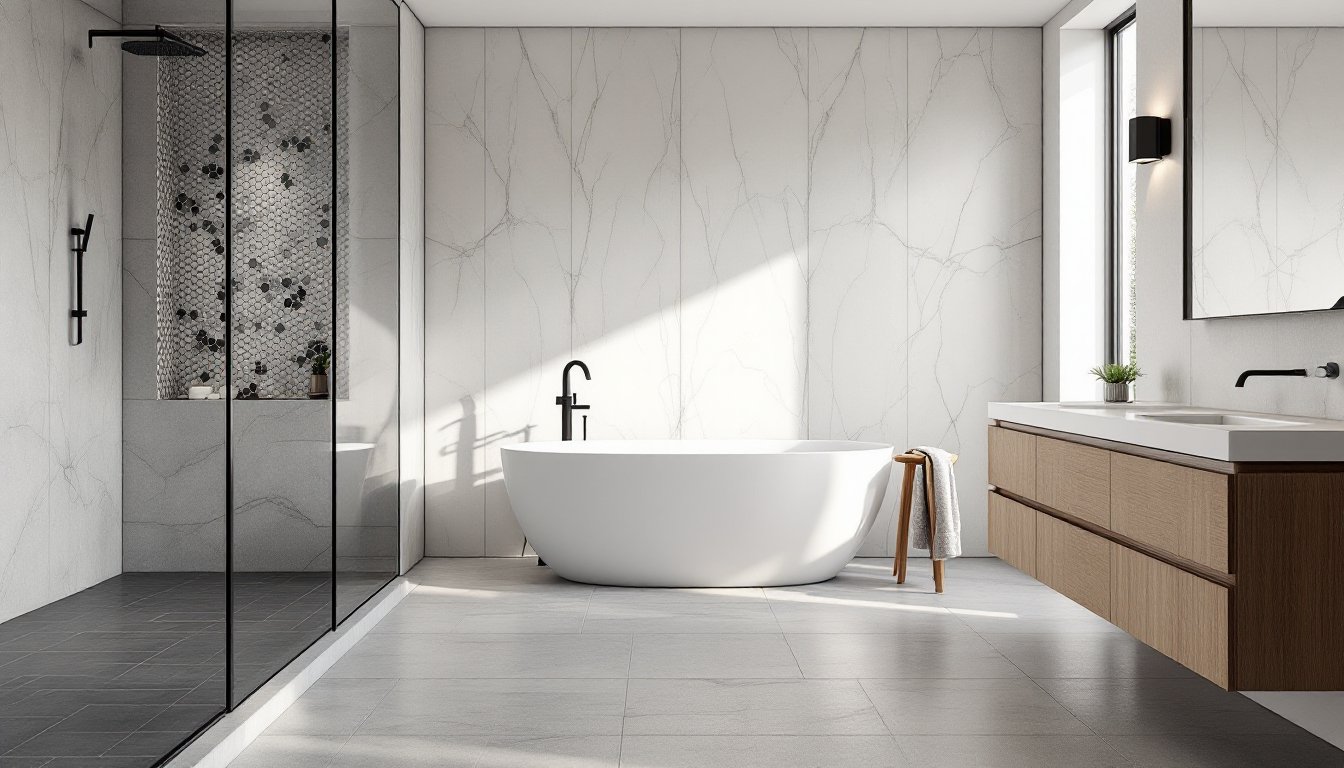
Large format tile, anything 15×15 inches or bigger, minimizes grout lines and creates a sleek, unbroken look. Common sizes include 12×24, 24×24, 24×48, and even 48×48-inch slabs. Fewer grout joints mean less maintenance, less mildew risk, and a visually larger space. They’re especially effective in small bathrooms where busy grout grids can feel cluttered.
These tiles demand flat substrates. Any dip or hump in the underlayment telegraphs through, causing lippage (edges that don’t align). Before installation, check the floor or wall with a 6-foot straightedge: variation over ⅛ inch across 10 feet typically requires self-leveling underlayment or additional thinset float work. Use large-and-heavy-tile mortar (medium-bed thinset) and back-butter every tile for full coverage.
Handling is harder. A 24×48-inch porcelain tile weighs 25–35 pounds. You’ll need help setting wall tiles and a tile lifting suction cup or panel carrier to avoid fingerprints on the face. A manual tile cutter won’t handle these sizes, rent or buy a 24-inch-capacity wet saw with an extension table.
Rectification matters. Rectified edges are machine-cut square, allowing tight 1/16-inch grout joints that enhance the seamless effect. Non-rectified edges vary slightly and need ⅛-inch or wider joints. For a truly minimal look, some installers use rectified slabs with 1/32-inch joints and epoxy grout, which resists staining and doesn’t require sealing.
Large format works beautifully for shower walls and tub surrounds aligned with contemporary design approaches that emphasize clean lines. Just know: a single crack or mistake tile means replacing a much larger, pricier piece.
Mixed Materials and Contrasting Textures
Layering different tile materials, porcelain with glass, stone with metal, matte with gloss, adds dimension without paint or wallpaper. Common pairings include subway tile walls with penny-round mosaic floors, or large-format porcelain floors with a marble mosaic shower niche. Mixing textures keeps the space from feeling flat.
Transition details matter. When different tile thicknesses meet, use Schluter or similar metal transition strips to bridge the height difference and protect edges. For walls, plan layout so the switch happens at a natural break, midway up a wall, at a niche border, or where the shower curb meets the floor.
Grout color unifies or separates. Matching grout color across materials creates cohesion: contrasting grout emphasizes each zone. A white subway tile with white grout paired with charcoal hexagon floor tile and black grout draws the eye down and segments the room visually.
Installation timing and materials vary. Glass tile needs white or light-colored thinset to avoid dark show-through. Metal tiles (stainless steel, copper, bronze accents) require non-modified thinset to prevent oxidation. Stone needs sealing before grouting to prevent staining. If you’re mixing materials, read each product’s technical data sheet for thinset compatibility and curing requirements, attempting to grout everything in one session often leads to problems.
One practical tip: test your layout digitally or on paper first. Interior design trend tools let you visualize combinations before buying materials. Mixed-material projects often create more waste, since cuts from one tile type rarely work for another.
Statement Accent Walls and Feature Zones
A feature wall or accent zone focuses attention and budget on one high-impact area, typically the shower back wall, the wall behind a freestanding tub, or a vanity backsplash. The rest of the room uses simpler, less expensive tile or even painted drywall (in non-wet zones).
Popular feature treatments include floor-to-ceiling marble slabs, zellige or handmade terracotta tiles, encaustic cement tiles, or 3D-textured porcelain panels. These materials often cost $15–$50 per square foot installed, so limiting coverage to 30–50 square feet keeps the project feasible.
Layout and symmetry anchor the effect. Center the feature zone on a window, tub centerline, or shower valve. If the wall isn’t perfectly plumb, shim the backer board or use leveling clips during installation, nothing kills a statement wall faster than tiles that tilt.
For three-dimensional or relief tiles (waves, hexagonal pyramids, stacked stone panels), use modified thinset with strong bond strength and back-butter every piece. These tiles add weight and surface irregularity: standard thinset may not hold. Check manufacturer specs for maximum allowable wall installation height and whether mechanical fasteners are required.
Lighting enhances texture. Grazing light from a sconce or recessed fixture placed to one side highlights relief and shadow. Flat overhead lighting flattens the effect. Plan electrical rough-in early if you’re adding fixtures to spotlight the wall.
Accent walls shine in designs that balance restraint elsewhere. Pairing a bold, trend-forward focal wall with neutral fixtures and flooring lets the tile be the hero without overwhelming the space.
Sustainable and Eco-Friendly Tile Options
Eco-conscious tile choices focus on recycled content, local sourcing, low-VOC adhesives, and durability. Tile itself is relatively green, it’s inert, doesn’t off-gas, and lasts decades, but manufacturing and shipping add environmental cost.
Recycled glass tile incorporates post-consumer or post-industrial glass. Brands often list recycled content percentages (look for 70% or higher). These tiles work well for accents and mosaics but can be pricier than standard ceramic. Recycled porcelain and ceramic tiles, made from reclaimed factory scraps, offer a budget-friendly and sustainable option for full-room installations.
Locally produced tile cuts transportation emissions. U.S.-made ceramic and porcelain tile from manufacturers in Tennessee, Ohio, or Texas reduces carbon footprint compared to imports from overseas. Check the product label or technical sheet for country of origin.
Natural clay and terracotta tiles, especially those fired in small batches or using renewable energy kilns, have lower embodied energy than high-fired porcelain. Terracotta requires sealing and isn’t ideal for shower floors, but works beautifully for powder room floors or tub surrounds in vintage or Mediterranean-style baths.
Installation materials matter too. Use low-VOC or zero-VOC thinset and grout. Many major brands now offer GreenGuard-certified options. Avoid solvent-based sealers: water-based penetrating sealers perform just as well with less odor and faster cure times.
Durability is the greenest feature. A tile floor that lasts 30 years without replacement beats any “eco” product that needs replacing in 10. Porcelain rated PEI 4 or 5 (suitable for heavy residential traffic) and properly installed will outlast cheaper alternatives and avoid the waste of early replacement. Drawing on proven interior design strategies that prioritize longevity ensures both style and sustainability.
Conclusion
Modern bathroom tile design balances aesthetics, durability, and installation reality. Whether choosing bold geometry, natural stone, or sustainable materials, success comes down to proper substrate prep, the right mortar and grout for each material, and realistic assessment of skill level. Large-format and mixed-material projects reward careful planning and quality tools. Feature walls deliver high impact without blowing the budget. Most importantly, tile is a long-term investment, choose materials and layouts that will still look intentional a decade from now, not just trendy today.