Table of Contents
ToggleDesigning a girl’s bedroom goes beyond picking a paint color and a bed frame. It’s about creating a space that supports her needs as she grows, balances function with personality, and can adapt over time without a full gut-and-redo. Whether she’s six or sixteen, the fundamentals stay the same: durable surfaces, smart storage, and a layout that won’t fight you when tastes inevitably shift. This guide walks through practical decisions, color schemes that age well, furniture arrangements that maximize square footage, and DIY touches that add character without commitment. No fluff, just the strategies that work.
Key Takeaways
- Choose neutral base colors like soft whites, warm grays, or greige for girls bedroom design ideas to allow flexibility as her taste evolves, then add personality through easily swappable accent colors in bedding, curtains, and throw pillows.
- Select durable, multi-functional furniture with solid wood or plywood construction, and measure the room carefully before purchasing to ensure proper layout with adequate clearance for movement and accessibility.
- Implement layered lighting with ambient, task, and accent options to create both functionality and mood, using dimmer switches and LED bulbs to reduce energy consumption and heat.
- Maximize storage through smart solutions like double hanging rods, under-bed rolling bins, wall-mounted hooks, and anchored cube organizers rather than relying solely on closet space.
- Plan gallery walls and wall decor on the floor first using paper templates, and use drywall anchors or studs rated for proper weight capacity to ensure safety and durability.
- Add affordable character through DIY projects like painted accent walls, fabric-covered bulletin boards, and repurposed thrift-store finds that can evolve as she grows without requiring a complete room redesign.
Choosing the Perfect Color Palette for a Girl’s Bedroom
Start with neutrals on large surfaces. Soft whites, warm grays, or greige (gray-beige blends) on walls give flexibility as her taste evolves. A gallon of quality interior latex covers roughly 350-400 square feet with one coat, so a standard 10×12 bedroom needs about two gallons for walls and ceiling.
Use accent colors in easily swappable elements: bedding, curtains, throw pillows, or a single accent wall. Peel-and-stick removable wallpaper works well for renters or commitment-phobes, it installs without paste and removes cleanly. If painting an accent wall, choose a low-VOC or zero-VOC formula for better indoor air quality, especially important in sleeping spaces.
For longevity, avoid hyper-trendy palettes. Dusty rose, sage green, soft lavender, or muted coral provide color without locking you into a theme. Pair them with natural wood tones or white furniture. If she wants bolder hues, contain them to accessories or DIY art pieces that can rotate out.
Consider sheen carefully. Eggshell or satin finishes on walls are easier to wipe down than flat paint, critical for younger kids. Semi-gloss works on trim and doors for durability. Test samples on a spare piece of drywall or poster board first: color shifts dramatically under different lighting.
Functional Furniture and Layout Ideas
Measure the room before buying anything. Standard twin beds are 38×75 inches: twins XL stretch to 80 inches and work better for taller kids or teens. A full (54×75 inches) fits if the room exceeds 10×10 feet and leaves walking clearance.
Place the bed against the longest wall, ideally not under a window (interferes with curtains and climate control). Leave at least 30 inches of clearance on one side for making the bed and getting in and out comfortably. If space is tight, push one side against the wall.
Modular furniture adapts as needs change. A desk with adjustable height works from elementary school through high school. Look for pieces that pull double duty: a storage ottoman, a daybed with trundle for sleepovers, or a loft bed that frees up floor space underneath for a desk or reading nook.
Avoid particleboard furniture if budget allows. Solid wood or plywood construction lasts longer and handles the wear of childhood better. Check drawer glides, side-mounted or undermount metal glides outlast plastic center mounts.
For small rooms, consider a Murphy bed or wall bed that folds up. These require blocking in the wall (2×6 or 2×8 lumber secured to studs) to handle the load. If you’re not comfortable with wall reinforcement, hire a handyman, improperly secured units are a safety hazard.
Keep furniture away from heating vents and radiators. Wood expands and contracts with humidity changes: direct heat accelerates warping.
Creative Wall Decor and Accent Solutions
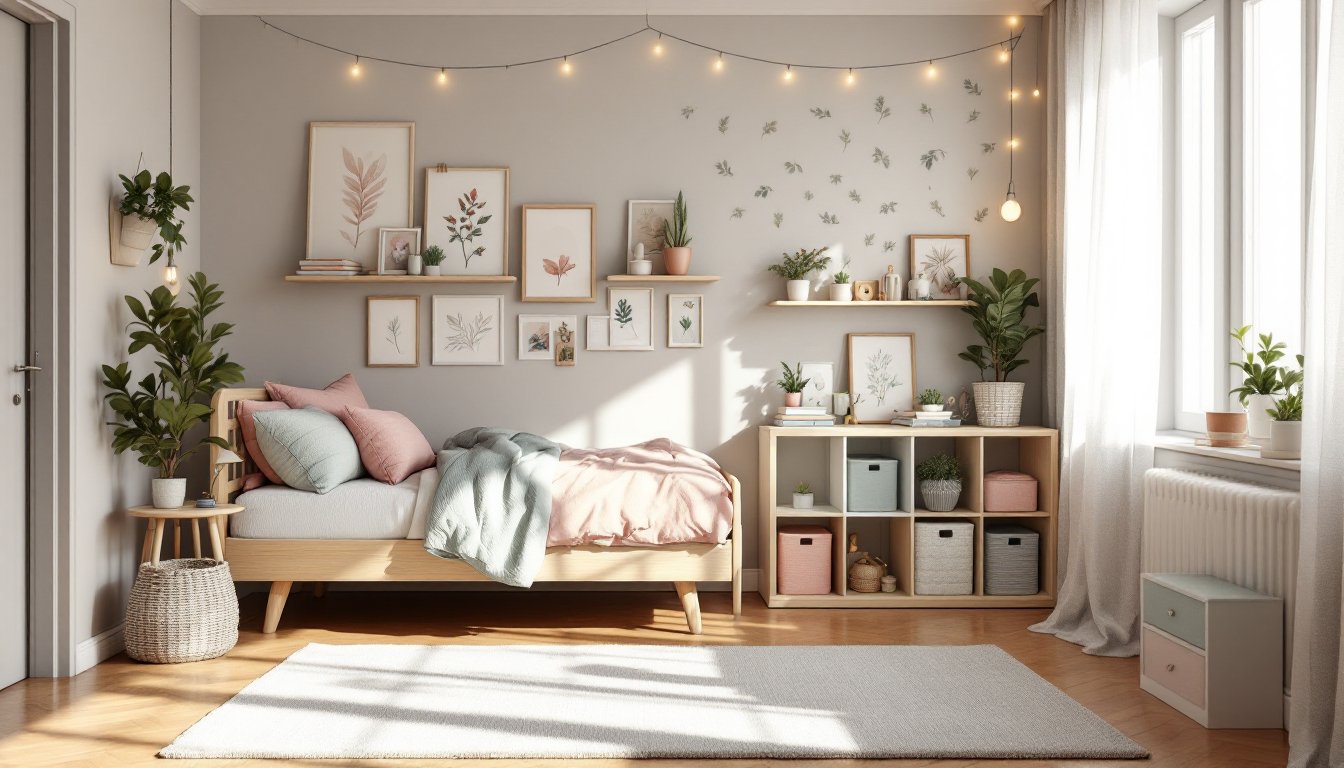
Gallery walls let her display art, photos, and mementos without committing to a single large piece. Use a paper template to plan the layout on the floor first, then transfer to the wall. For drywall, lightweight frames hang on picture hooks rated for the weight: heavier pieces need anchors. Drywall anchors (toggle bolts or molly bolts) distribute weight across a larger area than a nail alone.
Peel-and-stick options abound: wall decals, fabric panels, and removable murals. Quality varies, cheaper vinyl decals may leave residue or peel prematurely. Test a small corner first if you’re renting.
Floating shelves add display space without eating floor area. Install them into wall studs (typically spaced 16 inches on center) using a stud finder and 2.5-inch wood screws for solid hold. If studs don’t align where you want the shelf, use heavy-duty wall anchors rated for at least twice the expected load.
A pegboard wall offers flexible, reconfigurable storage for accessories, hats, or small plants. Paint it to match the room or leave natural. Mount it with standoffs (short spacers) behind so pegs and hooks have clearance.
Consider a cork board or magnetic board for a functional accent. Cork tiles install with adhesive and can be painted. Magnetic primer (applied under topcoat paint) turns any wall magnetic, though it requires multiple coats for strong hold.
For a textured accent, try board and batten or simple picture frame molding. Cut 1×2 or 1×3 pine strips, paint them, and attach with a brad nailer or construction adhesive. Miter corners at 45 degrees for clean joints. A miter saw handles this cleanly, but a miter box and handsaw work for small projects.
Storage Solutions That Blend Style and Function
Closets rarely offer enough space. Add a second hanging rod below the existing one to double capacity for shorter items. Adjustable closet systems (wire or laminate) install with basic tools and brackets secured to studs.
Under-bed storage reclaims wasted space. Rolling bins or drawers work best: avoid cardboard boxes that collapse or attract moisture. If building a platform bed, incorporate drawers or open cubbies into the frame. Use ¾-inch plywood for the platform and 1×4 or 1×6 boards for the frame, secured with wood glue and screws.
Wall-mounted hooks handle daily-use items: backpacks, jackets, hats. Space them 12-16 inches apart and at a height she can reach. Coat hooks with multiple prongs maximize vertical space.
Cube organizers (like the IKEA Kallax or similar) serve as room dividers, display shelves, and storage. Fabric bins fit inside for concealed storage. Anchor tall units to the wall with an anti-tip strap or L-bracket, toppling furniture is a serious risk.
Built-in window seats with lift-top storage work in rooms with bay windows or deep sills. Frame the bench with 2×4 lumber, add a plywood top, and hinge it for access. Upholster with foam and fabric, or add cushions. This is a weekend project for intermediate DIYers.
Overhead storage (shelves above the door or around the perimeter near the ceiling) holds seasonal items or things she’s outgrown but isn’t ready to donate. Keep weight limits in mind, standard drywall anchors hold 50 pounds max: heavier loads need blocking or solid mounting.
Lighting Design to Set the Perfect Mood
Layer lighting for flexibility. Ambient lighting (ceiling fixture or recessed cans) provides general illumination. Task lighting (desk lamp, reading light) supports assignments or hobbies. Accent lighting (string lights, LED strips, wall sconces) adds atmosphere.
A ceiling fixture on a dimmer switch offers control. Install a standard dimmer for incandescent or a compatible LED dimmer if using LED bulbs, mismatched dimmers cause flickering. If you’re not comfortable with electrical work, hire a licensed electrician. Wiring mistakes are a fire hazard and violate the National Electrical Code (NEC).
Plug-in wall sconces avoid hardwiring. Mount them at 60-66 inches above the floor on either side of the bed for reading. Use cord covers to hide cables.
LED strip lights under shelves or behind headboards create a soft glow. Choose color-changing RGB strips for customization or warm white (2700-3000K) for a cozy feel. Most run on low-voltage DC power and come with adhesive backing. Clean the surface with isopropyl alcohol before applying for better adhesion.
Table lamps and floor lamps add flexibility. Look for UL-listed fixtures (tested for safety). Use LED bulbs to reduce heat and energy use, a 10-watt LED replaces a 60-watt incandescent and lasts years longer.
String lights (fairy lights, Edison bulbs) work for ambiance but shouldn’t be the only light source. Don’t overload outlets, most bedroom circuits are 15 amps, and each outlet should handle no more than 12 amps continuously. If running multiple high-draw items (space heater, hair tools, lights), spread them across different circuits.
Personalizing the Space with DIY Touches
DIY projects add character without the cost of custom furniture. A painted accent wall with a geometric pattern takes a weekend and minimal supplies: painter’s tape, a level, a small foam roller, and sample-size paint. Plan the pattern on graph paper first, then transfer measurements to the wall with a pencil.
Fabric-covered bulletin boards or memo boards personalize a desk area. Stretch fabric over a cork board or foam insulation board, wrap the edges, and staple or glue on the back. Frame it with trim for a finished look.
Upholster a headboard from scratch using plywood, foam, batting, and fabric. Cut the plywood to size (a circular saw or jigsaw works), attach 2-inch foam with spray adhesive, wrap with batting, then fabric, and staple on the back. Mount to the wall with French cleats or brackets.
Custom shelving from reclaimed wood or construction-grade lumber adds warmth. Sand boards smooth, stain or paint, seal with polyurethane, and install with shelf brackets. Pine, poplar, or birch plywood are affordable and paint well. If using reclaimed wood, check for nails and sand thoroughly, splinters are no joke.
Stenciling or hand-painting designs directly on walls offers a personal touch. Use acrylic craft paint for small designs: it adheres well and cleans up with water. Seal with a clear topcoat if it’ll see wear.
Many budget home renovation ideas focus on maximizing impact with minimal spend, especially in kids’ spaces that evolve quickly. Repurpose thrift-store finds: an old ladder becomes a blanket rack, vintage crates mount as shelves, or an outdated dresser gets fresh paint and new hardware.
Conclusion
A well-designed girl’s bedroom balances her current preferences with the flexibility to grow. Focus on durable materials, adaptable layouts, and color schemes that transition easily. Invest time in smart storage and layered lighting, those pay off daily. DIY touches let her personality shine without locking the room into a single phase. Build it right, and you won’t be redoing it in two years.