Table of Contents
ToggleA U shaped kitchen wraps countertop and cabinetry around three walls, creating one of the most efficient work triangles in residential design. Whether working with a compact 8×10 space or a sprawling open-concept layout, this configuration keeps everything within arm’s reach while maximizing storage and prep area. The challenge isn’t whether a U shaped layout works, it’s how to execute it without making the space feel cramped, blocked off, or awkward to navigate. From corner cabinet solutions to strategic sight lines, the following design ideas address real-world constraints with practical, buildable approaches.
Key Takeaways
- U shaped kitchen design creates an efficient work triangle with the sink, range, and refrigerator 4–9 feet apart, minimizing foot traffic and preventing cross-traffic congestion.
- Maintain 42–48 inches of clearance between opposing base cabinets to ensure comfortable navigation and accessibility for multiple cooks or wheelchair users.
- Corner cabinet solutions like LeMans pull-outs or magic corner hardware recover up to 90% of storage in tight spaces, compared to just 50% in standard corner cabinets.
- Light-colored cabinetry, continuous countertop materials, and under-cabinet LED lighting expand the perceived spaciousness of compact U shaped kitchens under 100 square feet.
- In open-concept U shaped kitchens, lower upper cabinets on the wall facing the living area or use floating shelves to preserve sight lines while cooking.
- Proper electrical and plumbing planning during the design phase—including GFCI protection, dedicated appliance circuits, and vented range hoods—prevents costly retrofits and ensures code compliance.
Why U Shaped Kitchens Are Perfect for Modern Homes
The three-wall layout delivers a natural work triangle, placing the sink, range, and refrigerator at optimal distances, typically four to nine feet apart per ergonomic kitchen planning standards. This keeps foot traffic minimal and prevents the cross-traffic issues common in galley or L shaped designs.
U shaped kitchens shine in homes where the kitchen doubles as a zone for meal prep, assignments, and entertaining. The continuous counter wraps users in a functional cocoon, allowing multiple cooks to work without bottlenecks. Unlike islands that eat floor space, the perimeter-focused design keeps the center open for movement.
One structural advantage: most U shaped kitchens back onto utility runs (plumbing, gas, electrical), making renovations more straightforward. Running new supply lines or adding a second sink often requires less demolition than reconfiguring a center-island setup.
Consider whether the space can handle the footprint. Building codes generally require 42 inches of clearance between opposing base cabinets for accessible design: 48 inches is more comfortable for two cooks. Measure twice before committing to the layout.
Small U Shaped Kitchen Design Ideas That Feel Spacious
Compact U shaped kitchens, those under 100 square feet, benefit from vertical storage and reflective surfaces. Extend upper cabinets to the ceiling (standard residential ceiling height is 96 inches) to capture otherwise wasted space. Use 12- or 15-inch-deep upper cabinets instead of the standard 24 inches on one wall to prevent the tunnel effect.
Glass-front or open upper cabinets on the shorter leg of the U trick the eye into perceiving depth. Pair this with under-cabinet LED strip lighting (look for 3000K color temperature for a warm, neutral glow) to eliminate shadows and make counters feel larger.
Choose 24-inch-deep base cabinets with drawer stacks rather than traditional door-and-shelf units. Full-extension soft-close drawer slides let users access the entire cavity without kneeling or reaching, a key advantage in tight quarters. For corner base cabinets, skip the lazy Susan and install a LeMans pull-out system or magic corner hardware, these extract 90% of the storage vs. the 50% accessible in a standard corner cabinet.
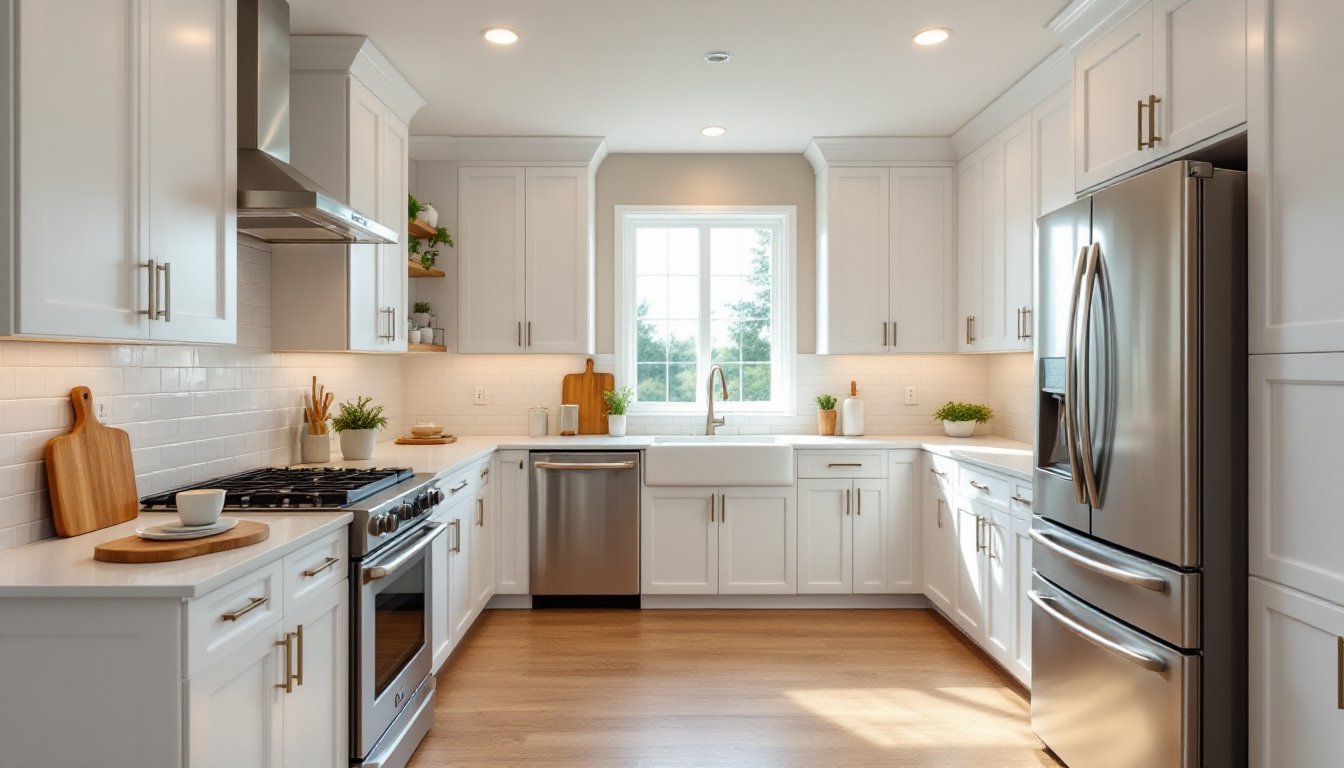
Light-colored cabinetry and continuous countertop material (quartz, solid surface, or butcher block without seams) create visual flow. Avoid busy backsplash patterns: a simple 3×6 subway tile in a stacked or running bond keeps lines clean. Designers often recommend studying successful interior design trends to understand how color and material continuity expand perceived space.
Large U Shaped Kitchen Layouts for Open-Concept Living
Kitchens exceeding 150 square feet can afford wider aisles and integrated seating. A 48- to 60-inch aisle accommodates bar stools tucked under one leg of the U, transforming a work counter into a casual dining zone. Use 36-inch-tall counter height for standard seating or 42-inch bar height if the stools will double as overflow party seating.
In open-concept homes, one leg of the U often faces the living or dining area. Lower that wall’s upper cabinets or eliminate them entirely in favor of floating shelves or a low-profile range hood. This preserves sight lines while cooking and keeps the kitchen from feeling like a walled-off galley.
Appliance garages and panel-ready refrigerators maintain a clean facade. A 42-inch built-in fridge (actual width 42 inches, not cabinet opening) integrates seamlessly when wrapped in cabinetry panels that match the rest of the kitchen. Budget $3,000–$8,000 for panel-ready units, depending on capacity and brand.
Consider dual sinks: a large 33×22-inch undermount in the primary work zone and a smaller 15-inch bar sink on the opposite leg for beverage prep or vegetable washing. Run a dedicated ½-inch cold water line to the bar sink if adding a pot filler or instant hot-water dispenser. Check local plumbing codes: some jurisdictions require an air gap for secondary sinks.
According to resources like The Kitchn, large U shaped kitchens also allow for dedicated appliance zones, grouping the microwave, toaster oven, and coffee station on one leg to keep counter clutter contained.
Storage Solutions to Maximize Your U Shaped Kitchen
Corner cabinets represent the biggest storage challenge. Standard 36-inch-wide blind corner base cabinets waste roughly half their interior. Retrofit options include:
- LeMans units: Chrome wire shelves that pivot out 270 degrees (requires a 39-inch cabinet width)
- Magic corner pull-outs: Articulating baskets that extend forward, then sideways
- Diagonal corner drawers: Custom cabinetry solution that turns the corner into accessible drawer space (adds 15–20% to cabinet cost)
Tall pantry cabinets (84 or 96 inches) on one end of the U can replace traditional upper cabinets. Specify 18- or 24-inch-deep units with pull-out shelving for dry goods. A 24-inch-wide pantry yields about 12 linear feet of shelf space, the equivalent of four wall cabinets.
For small appliances, install a lift-up appliance garage in the corner or a tambour door unit (rolling slat door) to conceal the coffee maker and toaster without sacrificing counter space. These typically require a 30-inch-wide cabinet and at least 18 inches of depth.
Drawer dividers and peg systems (like those from Rev-A-Shelf or similar) keep utensils and cookware organized. Use full-extension soft-close slides rated for 100 lbs on lower drawers intended for pots and pans: cheap slides sag under weight within a year.
Many designers on platforms like Homedit emphasize that integrated storage planning during the design phase, not after installation, prevents the cluttered counters that plague U shaped kitchens.
Color Schemes and Material Choices for U Shaped Kitchens
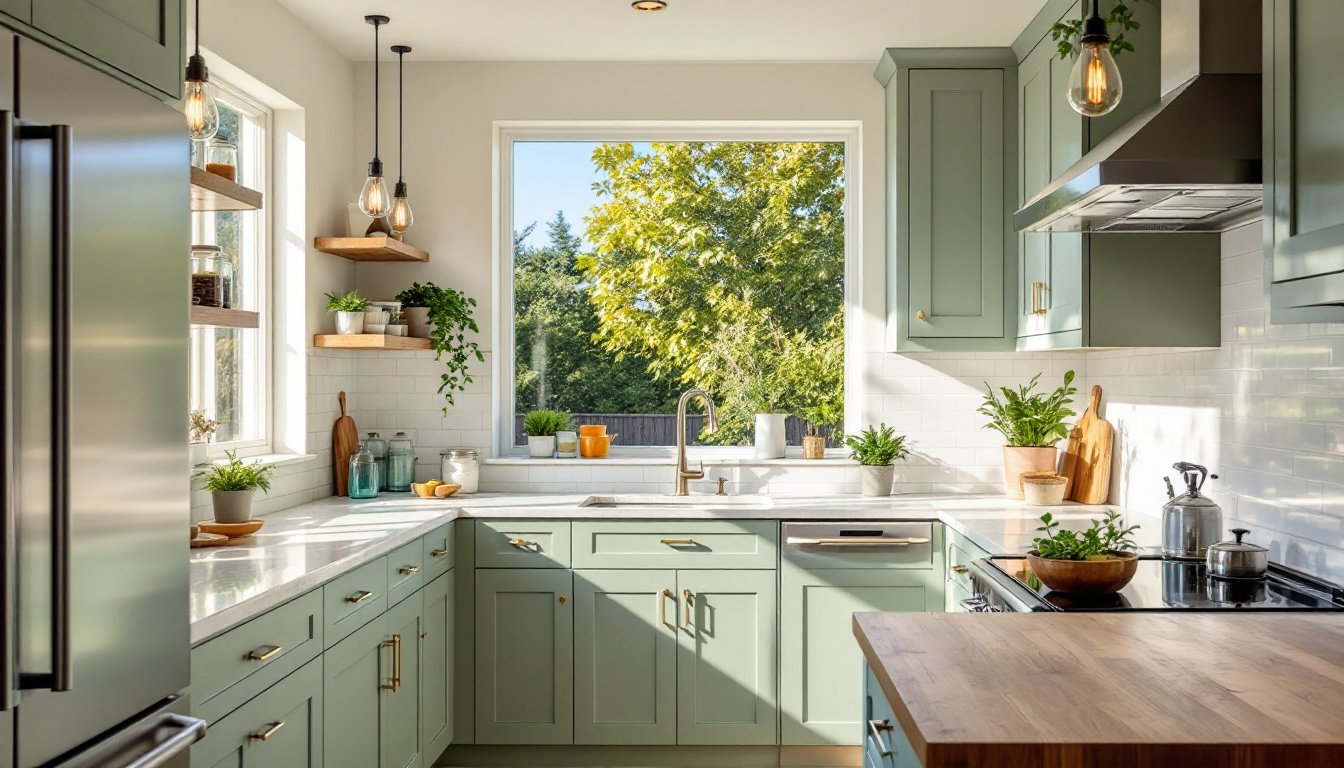
Light or neutral base colors prevent a U shaped layout from feeling enclosed. White, light gray, greige, or soft blue cabinetry reflects ambient light and expands visual boundaries. Reserve darker tones, navy, charcoal, deep green, for accent elements like an island (if adding one at the open end) or a single feature wall.
Two-tone cabinetry works well in U shaped kitchens: light uppers with darker lowers, or a contrasting color on the range wall. This breaks up the visual mass of cabinetry wrapping three walls. Just keep the transition intentional, align the color break with a natural divider like the range hood or a window.
For countertops, quartz slabs (typically 120×55 inches) minimize seams better than smaller granite tiles. A single slab can often cover an 8-foot run without joints. Expect seams at inside corners: a skilled fabricator can book-match the pattern for a less noticeable transition.
Backsplashes should be simple. Subway tile, 3×6 or 4×12, in white or a single accent color keeps the eye moving horizontally. Avoid intricate mosaics across all three walls, they’ll compete for attention. If using a bold pattern or slab backsplash, limit it to the range wall.
Matte finishes on cabinetry and hardware reduce glare in the high-traffic work zone. Brushed nickel or stainless pulls and knobs blend with appliances and won’t show fingerprints as readily as polished chrome.
Flooring should run perpendicular to the longest leg of the U to elongate the space. Luxury vinyl plank in a 7- or 9-inch width mimics hardwood without the moisture issues near the sink. Make sure underlayment meets manufacturer specs: many LVP products require a moisture barrier over concrete subfloors.
Common Mistakes to Avoid When Designing a U Shaped Kitchen
Ignoring the work triangle. Placing the sink, cooktop, and fridge more than 9 feet apart or less than 4 feet adds unnecessary steps. Keep the triangle compact but not cramped. Use painter’s tape on the floor to mock up appliance locations before ordering cabinetry.
Skimping on aisle width. A 36-inch clearance might meet code, but it’s tight for two people or anyone using a wheelchair. Aim for 42 to 48 inches if the room allows. Measure with cabinet doors and the dishwasher open, a 24-inch-deep base cabinet plus a fully open door extends roughly 45 inches into the aisle.
Overlooking ventilation. U shaped kitchens often place the range on an interior wall with no window. Installing a ducted range hood (venting to the exterior) is far more effective than recirculating models. Ductwork should be 6-inch rigid metal, not flexible foil, and run the shortest path to an exterior wall or roof. Many local codes require 100+ CFM (cubic feet per minute) airflow for gas ranges: check the IRC or local amendments.
Poor lighting layers. Overhead recessed lights create shadows on counters. Combine 4-inch LED recessed cans spaced 4 feet apart with under-cabinet task lighting. Install LED strips on a separate dimmer switch for flexibility.
Neglecting electrical planning. Building code (NEC) requires two 20-amp small appliance circuits in kitchens, plus dedicated circuits for the dishwasher, disposal, microwave, and range. Plan outlet placement before drywall goes up: outlets should be spaced no more than 4 feet apart along countertops. GFCI protection is mandatory within 6 feet of a water source.
Many homeowners reference galleries on sites like Remodelista’s U-shaped kitchen roundup for inspiration but fail to adapt dimensions to their own space. A layout that works in a 12×14 room won’t translate to a 9×10 without modifications.
Conclusion
A well-executed U shaped kitchen balances efficient workflow, ample storage, and visual openness, provided the design respects dimensional constraints and user habits. Prioritize aisle clearance, corner access, and lighting layers over trendy finishes. Measure carefully, plan electrical and plumbing rough-ins before framing, and don’t hesitate to consult a kitchen designer or contractor for structural or code questions. The payoff is a kitchen that works as hard as it looks.