Table of Contents
ToggleA double shower setup isn’t just for hotel bathrooms anymore. With the right layout and fixtures, homeowners can create a walk-in double shower that delivers spa-level luxury while solving real-world problems, like eliminating the morning bottleneck when two people need to get ready at once. Unlike traditional tub-shower combos, a walk-in double shower maximizes floor space, improves accessibility, and offers serious design flexibility. Whether remodeling a primary suite or upgrading a shared bath, this configuration is one of the most practical investments in a modern home.
Key Takeaways
- A walk-in double shower maximizes floor space and increases home resale value by 60–70%, making it one of the most practical bathroom investments for modern homes.
- Proper sizing is critical: double showers need at least 60 inches of width (72 inches ideal) to avoid overcrowding, with side-by-side or opposite-wall configurations offering different benefits depending on bathroom layout.
- Waterproofing systems like Schluter Kerdi or liquid-applied membranes are essential to prevent mold and rot, and should never be skipped regardless of tile selection.
- High-flow fixtures require a tankless water heater or 75+ gallon tank to avoid temperature drops, and thermostatic mixing valves enable independent temperature control for each user.
- Smart integrations like preset digital controls, heated radiant floors, and built-in niches (positioned 48–54 inches high) transform a double shower into a luxury spa experience while improving daily functionality.
- Proper ventilation rated for 80 CFM or higher and grab bars installed into solid framing are essential safety features that prevent mold and ensure accessibility.
What Makes a Walk-In Double Shower Worth It?
Double showers solve the simultaneous-use problem that couples and families face every morning. Instead of coordinating schedules around a single showerhead, both users get dedicated water coverage without crowding.
Beyond convenience, walk-in double showers increase home resale value. Buyers consistently rank updated primary bathrooms as a top priority, and a well-executed shower remodel can return 60–70% of its cost at sale in most markets. The key is proportional sizing, jamming two showerheads into a 36-inch stall won’t impress anyone. A functional double shower needs at least 60 inches of width to avoid elbow-bumping, with 72 inches being ideal for true comfort.
Accessibility is another advantage. Curbless or low-threshold walk-in designs meet ADA guidelines and future-proof the bathroom for aging in place. Eliminating the tub also frees up square footage, which can be redirected into a larger shower footprint, a double vanity, or improved storage.
One honest trade-off: double showers use more hot water simultaneously. Make sure the water heater can handle the load, most standard 50-gallon tanks will struggle with two high-flow heads running at once. A tankless water heater or a larger tank (75+ gallons) is often necessary to avoid mid-shower temperature drops.
Design Layouts for Walk-In Double Showers
Layout dictates function, and there are two dominant configurations that work in most bathroom footprints.
Side-by-Side Dual Showerhead Configuration
This layout places both showerheads on the same wall, spaced 24 to 36 inches apart. It’s the most compact option and works well in bathrooms where one long wall is available (think 8 feet or more). Each user gets their own spray zone without crossing paths.
Install a single mixing valve with a diverter, or run two separate valves if users prefer different temperatures. The single-valve approach saves on rough-in costs but forces a compromise on water temp. Dual valves add roughly $200–$400 in plumbing labor but deliver independent control.
This configuration pairs well with a bench seat on the opposite wall, giving one person a place to sit while the other rinses off. Use a floating teak bench or a built-in tiled seat with a sloped top for drainage.
Opposite-Wall Placement for Maximum Space
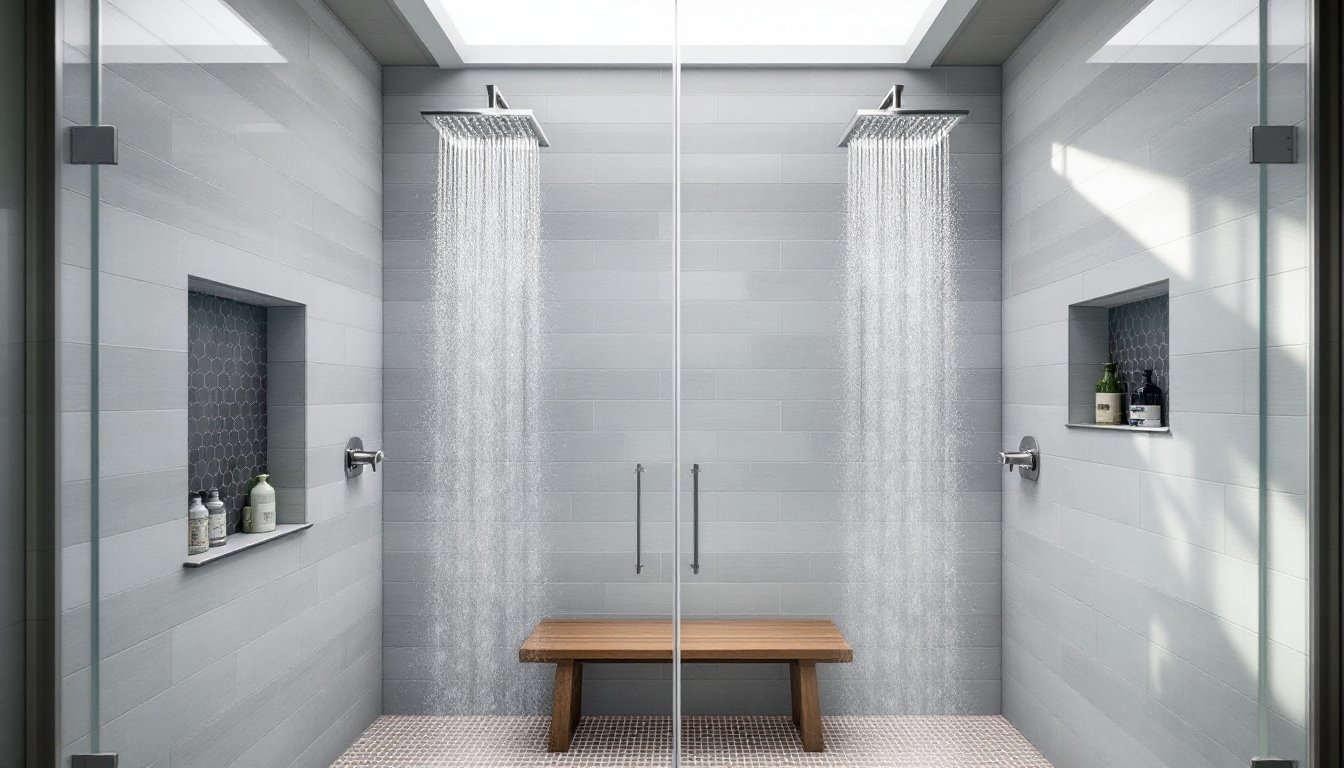
For larger bathrooms, mounting showerheads on facing walls creates a true dual-zone shower. Each person gets a dedicated corner, and the center remains open. This layout requires a minimum of 48 inches between walls to avoid a cramped feel: 60 inches is better.
Run separate drain lines if possible, or position a single linear drain in the center with a gentle slope from both ends. Linear drains (like Schluter Kerdi-Line or similar) are ideal here, they handle higher water volume and eliminate the need for a centered point drain that could sit awkwardly in the traffic path.
Opposite-wall layouts shine in primary suites where the shower is a visual centerpiece. Frameless glass enclosures keep sightlines open, and strategic tile changes (like a accent stripe or mosaic band) help define each user’s zone without adding physical barriers.
Stunning Tile and Material Combinations
Tile selection sets the tone, and double showers offer enough real estate to get creative without overwhelming the space.
Large-format porcelain (12×24 inches or bigger) minimizes grout lines and speeds up cleaning. Run these horizontally on walls to visually widen the shower, or vertically to add height. Porcelain rated for wet areas (with a water absorption rate below 0.5%) is non-negotiable, natural stone like marble looks incredible but requires sealing every 6–12 months and is prone to etching from acidic soaps.
For accent walls, subway tile in a herringbone or vertical stack pattern adds texture without going overboard. Reserve bold mosaics or geometric patterns for a single feature wall, placing them on the wall opposite the entrance creates a focal point that doesn’t overwhelm daily use.
Waterproofing matters more than tile choice. Use a bonded membrane system like Schluter Kerdi or a liquid-applied membrane (Laticrete Hydro Ban, RedGard) over cement board. Skipping or botching the waterproofing layer is the #1 cause of shower failures, leading to mold, rot, and expensive tear-outs within 5 years. Many bathroom remodels now favor walk-in showers for their clean lines and accessible design.
Mix materials thoughtfully. Pair a matte white subway tile on three walls with a charcoal or navy hex mosaic on the fourth. Or combine large-format gray porcelain with a thin band of glass mosaic at eye level for a subtle shimmer. Avoid mixing more than three tile types in one enclosure, it starts looking like a showroom sample wall.
For the shower floor, choose slip-resistant tile with a DCOF rating of 0.42 or higher (that’s the industry standard for wet barefoot traffic). Small mosaics (1×1 or 2×2 inch) offer great grip thanks to the increased grout lines, but they’re tedious to clean. Textured 12×12 porcelain is a good middle ground.
Showerhead and Fixture Options to Elevate Your Double Shower
Fixtures are where luxury becomes tangible. The difference between a builder-grade double shower and a high-end spa experience often comes down to showerhead choice and control placement.
Fixed rainfall showerheads (10–12 inches in diameter) deliver broad, even coverage and work well for one of the two positions. Mount these at 80–84 inches above the finished floor, high enough to avoid head-bumping but not so high that the water cools before it reaches you. Pair the rain head with a handheld wand on a slide bar for the second position. Handhelds add versatility for rinsing pets, washing kids, or cleaning the enclosure.
For a true upgrade, consider thermostatic mixing valves with separate volume and temperature controls. Brands like Grohe, Kohler, and Delta offer trim kits that let each user dial in their preferred temp without affecting the other side. This requires additional rough-in work (plan for it during the framing stage), but it’s worth it if two users have very different heat tolerance.
Wall-mounted body sprays are another option. Install 2–4 adjustable jets at torso and lower-back height for a hydromassage effect. Just be aware: body sprays are water hogs. A typical setup uses 6–8 GPM (gallons per minute) per fixture, which will overrun most residential water heaters and may require a recirculating pump or second heater.
Finish consistency matters. If the showerheads are brushed nickel, the drain cover, valve trim, and any grab bars should match. Mixing finishes (like chrome and oil-rubbed bronze) rarely looks intentional in a shower enclosure, save that for broader bathroom design.
Finally, don’t cheap out on the valve bodies. A quality pressure-balancing or thermostatic valve prevents sudden temperature spikes when a toilet flushes or dishwasher kicks on. Kohler Rite-Temp, Delta MultiChoice, and Grohe TurboStat are all solid choices. Budget around $150–$300 per valve body plus installation.
Smart Features and Storage Solutions
Modern double showers go beyond basic plumbing. Integrating tech and storage transforms the space into a true daily retreat.
Digital shower controls (like Kohler DTV+ or Moen U) let users preset temperature, flow, and even steam settings via a wall-mounted touchscreen or smartphone app. Some systems remember individual user profiles, so each person can call up their preferred settings with one tap. Expect to spend $800–$2,000 for the control module and installation, not including the fixtures themselves.
Built-in niches are essential. Plan at least two recessed shelves, one per user, sized around 12×28 inches and located between 48–54 inches off the floor (roughly chest height). Frame these during the stud stage, waterproof them with membrane, and tile the interior. Niches keep bottles off the floor and eliminate the need for hanging caddies that collect soap scum.
If wall framing doesn’t allow for niches (say, you’re working with steel studs or shallow walls), use floating corner shelves made of solid surface material or teak. Avoid suction-cup caddies, they fail in wet environments and look cheap.
Heated floors are a no-brainer upgrade. Electric radiant mats (like Schluter DITRA-HEAT) install directly under the tile and cost $8–$12 per square foot in materials. They warm up in 20–30 minutes, eliminate cold shock on winter mornings, and speed up floor drying (which cuts down on mildew). Wire the system to a programmable thermostat so it’s ready when you are.
For ventilation, double showers generate more steam than single setups. Install a bath fan rated for at least 80 CFM (cubic feet per minute) if the bathroom is under 100 square feet, or 1 CFM per square foot for larger spaces. Panasonic WhisperCeiling and Broan Ultra Silent series are both quiet enough (under 1 sone) that you won’t hear them over the water. Proper ventilation isn’t optional, it prevents mold and extends the life of grout and caulk.
If browsing design inspiration online, platforms like Houzz and HGTV showcase thousands of real-world double shower remodels with photos, product specs, and contractor contacts. They’re useful for gauging what works in similar-sized spaces and identifying fixture combinations before committing to a purchase.
Safety extras: Install at least one grab bar even if mobility isn’t currently an issue. Modern bars come in sleek, low-profile designs that double as towel bars. Mount them into solid blocking (2×6 or 2×8 framing) behind the tile, not just into drywall anchors. If this is a gut remodel, add blocking at 33–36 inches above the floor on at least two walls.