Table of Contents
ToggleBuilding a deck doesn’t have to mean complex framing plans or a contractor’s invoice. Simple deck designs offer the same outdoor living space without the headaches, and many can be tackled over a long weekend with basic carpentry skills. These straightforward layouts cut down on material waste, reduce permit hassles in many jurisdictions, and still deliver a solid return on effort. Whether it’s a ground-level platform or a floating deck tucked into a small yard, simplicity opens the door for homeowners ready to swing a hammer themselves.
Key Takeaways
- Simple deck designs eliminate complex framing and expensive contractors by using straightforward layouts with standard 16-inch joist spacing and fewer posts, making them ideal for DIY homeowners with basic carpentry skills.
- Ground-level platform decks under 30 inches often bypass formal permits and can be built over a weekend for $600–$1,200 using concrete pier blocks and pressure-treated lumber, eliminating deep footing excavations.
- Floating decks are freestanding alternatives perfect for small yards and rental properties, avoiding ledger board flashing complications while using adjustable deck foot anchors for seasonal flexibility.
- Classic rectangular and square deck designs maximize usable space and minimize material waste by aligning with standard lumber lengths and reducing angled cuts.
- Built-in seating and minimalist composite or natural wood finishes add polished details without increasing construction complexity, with hidden fasteners and single decking directions creating a clean, professional appearance.
- Always verify local building codes for permit requirements and safety standards, such as railing height (36 inches) and baluster spacing (4 inches maximum) on decks over 30 inches above grade.
Why Simple Deck Designs Are Perfect for DIY Homeowners
Simple decks strip away unnecessary complexity. They typically use fewer posts, straightforward beam layouts, and uncomplicated joist spacing, usually 16 inches on center to match standard framing conventions. This makes material lists easier to calculate and cuts less room for measuring errors.
From a permitting standpoint, many municipalities allow ground-level decks under 30 inches in height to bypass formal approval, though it’s critical to confirm local code. That means less paperwork and faster build timelines. DIYers also avoid deep footing excavations and complex ledger board attachments when keeping things low and freestanding.
Tool requirements stay manageable. A circular saw, cordless drill, level, speed square, and post-hole digger cover most needs. If angled cuts are minimal, a miter saw isn’t mandatory. Simplicity doesn’t sacrifice durability, it just leans on proven joinery and standard span tables instead of custom engineering.
Ground-Level Platform Decks: Easy and Affordable
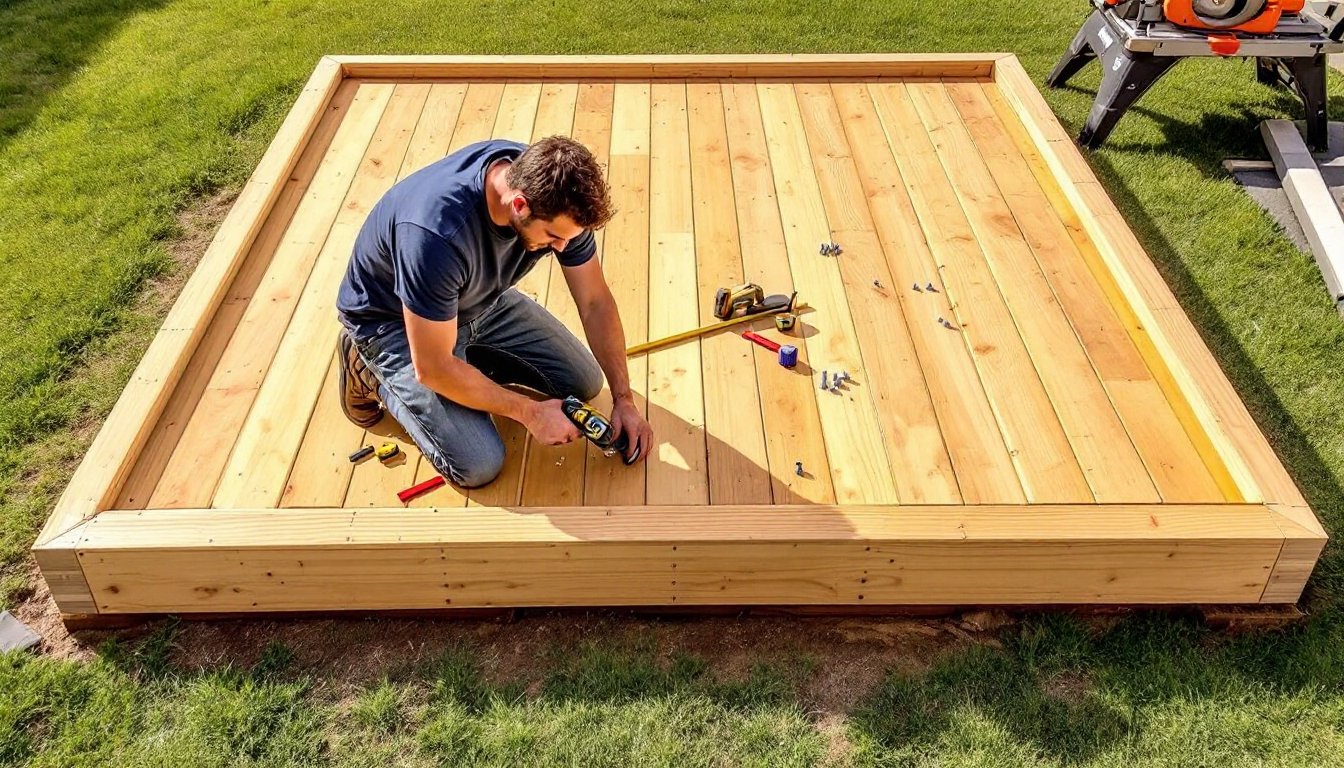
Ground-level platform decks sit within 12 inches of grade and often rest on concrete pier blocks or gravel pads instead of deep footings. This design suits flat or gently sloped yards and eliminates railing requirements in most codes, saving both material cost and labor.
Typical construction steps:
- Layout and leveling: Use stakes and string to mark the perimeter. Check diagonals to ensure square.
- Foundation: Set precast concrete deck blocks on compacted gravel, spaced to support perimeter and interior beams. Blocks should sit level: use a 4-foot level and shim with gravel as needed.
- Frame the perimeter: Attach 2×6 or 2×8 treated lumber for rim joists, secured with 3-inch exterior screws or galvanized nails.
- Install joists: Run 2×6 joists at 16-inch centers between rim joists. Use joist hangers for clean connections.
- Decking: Fasten 5/4×6-inch deck boards perpendicular to joists, leaving a 1/8-inch gap for drainage. Start from the house side if applicable, and work outward to hide any rip cuts at the far edge.
Material costs for a 10×12-foot platform typically range from $600 to $1,200 depending on lumber grade and region. Pressure-treated southern yellow pine is the budget choice: cedar or redwood costs about 30–50% more but weathers naturally without stain. Many DIYers building small-scale projects appreciate resources like free deck plans to streamline layout and cut lists.
Floating Deck Designs for Small Yards and Patios
Floating decks are freestanding structures not attached to the house, making them ideal for rental properties, uneven terrain, or situations where ledger attachment isn’t feasible. They rest on adjustable deck foot anchors or pier blocks and can be relocated if needed.
Because they’re not anchored to a building, they avoid the ledger board flashing details that trip up many first-time builders. They also sidestep frost-heave concerns in colder climates when paired with adjustable plastic deck supports that distribute load and allow minor seasonal movement.
Build considerations:
- Size limits: Keep floating decks under 200 square feet for simplicity. Larger frames require additional blocking and diagonal bracing.
- Levelness: Even a 1/4-inch slope per foot affects furniture stability. Use a water level or laser level for accuracy across the entire footprint.
- Decking direction: Running boards diagonally (at 45 degrees) adds visual interest and can make a small deck feel larger, but increases waste by about 15%.
Floating decks pair well with container gardens, string lights, and low-voltage LED strips along the perimeter. They’re also popular for hot tub pads, though a structural engineer should verify joist sizing and spacing for concentrated loads exceeding 100 pounds per square foot.
Classic Rectangle and Square Deck Layouts
Rectangular and square decks are the backbone of DIY deck building. They maximize usable space, minimize angled cuts, and align with standard lumber lengths (8, 10, 12, and 16 feet). This reduces both waste and the need for complex miter work.
A 12×16-foot rectangle is a common size, offering roughly 200 square feet, enough for a dining set, grill, and a few chairs. Joists can span the 12-foot direction using 2×8 treated lumber, which supports residential live loads (40 psf) at 12-foot spans per most span tables. Beams run perpendicular underneath, typically at mid-span and perimeter.
Framing tips:
- Double rim joists at the perimeter add stiffness and provide solid backing for railing posts.
- Block or bridge joists at mid-span to prevent twisting, especially with wider boards like 2×10s.
- Stagger butt joints in decking by at least two joists to avoid visual lines and weak spots.
Square decks (such as 12×12 or 10×10) work well in tight yards or as landings at door thresholds. They often require only a single beam line down the center, simplifying the foundation layout. For planning complex projects or budgeting, consulting home improvement cost guides helps avoid surprises on materials and labor.
Single-Level Decks with Built-In Seating
Integrating benches into the deck frame eliminates the need for separate furniture and creates a finished look. Built-in seating uses the same framing lumber as the deck, keeping material sourcing simple.
Bench construction basics:
- Extend posts: If the deck uses 4×4 posts for structural support, extend them 18 to 36 inches above the deck surface to serve as bench seat supports.
- Horizontal supports: Attach 2×4 or 2×6 treated boards between posts at seat height (16 to 18 inches above decking) and backrest height (30 to 36 inches).
- Seat surface: Cap with 2×6 or 2×10 boards, slightly overhanging the front edge for comfort. Round or chamfer sharp edges with a router and a 1/4-inch roundover bit.
- Backrest (optional): Add vertical 2×2 balusters or horizontal slats between the seat and top rail.
Built-in benches along one or two sides of a deck don’t usually count against the square footage for permit purposes, but they do affect material quantities. Budget an extra 10–15% in lumber and fasteners. If the seating will bear significant weight (more than two adults), double-check post spacing and footing depth per local codes.
Safety note: Benches don’t replace code-required railings on elevated decks. If the deck surface is more than 30 inches above grade, install a 36-inch guardrail with balusters spaced no more than 4 inches apart (IRC requirement).
Minimalist Composite and Wood Deck Ideas
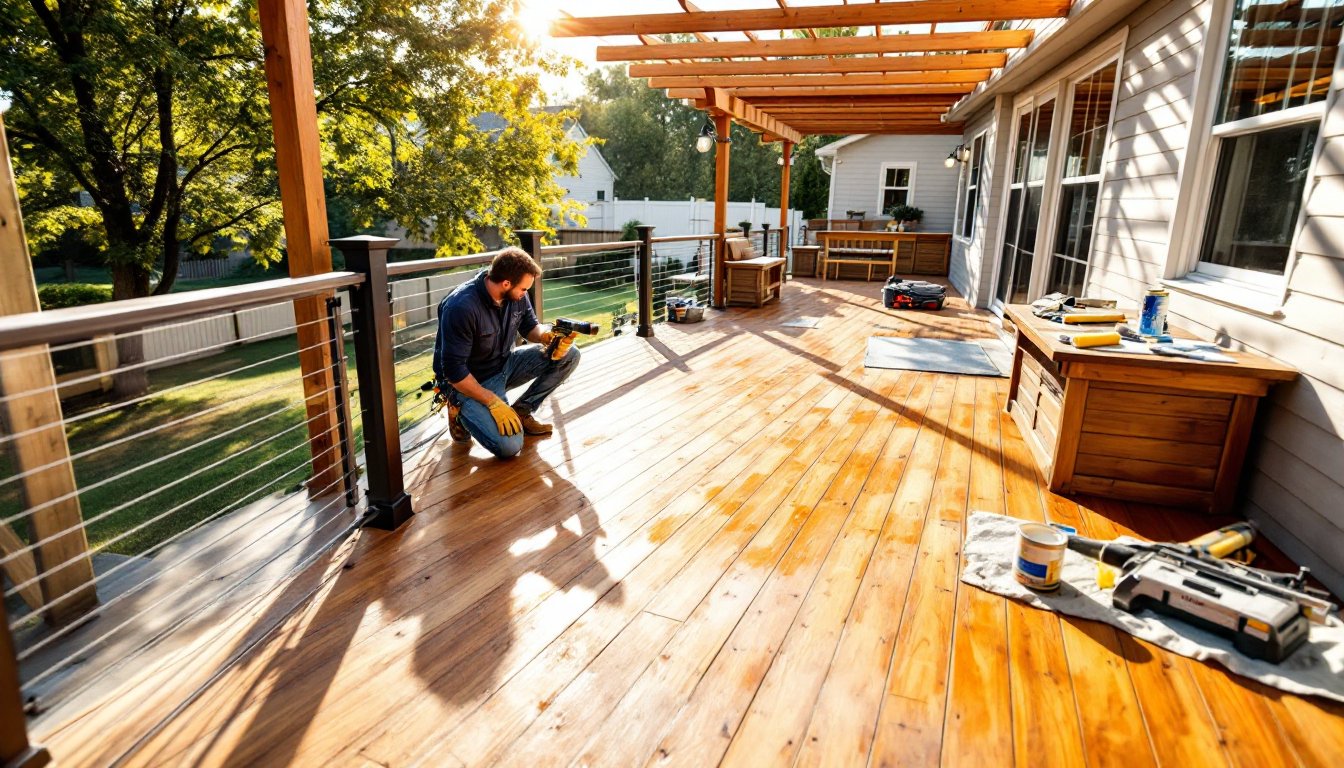
Minimalist designs focus on clean lines, hidden fasteners, and neutral color palettes. This aesthetic suits both composite decking (PVC or capped polymer) and natural wood like ipe, cumaru, or thermally modified ash.
Composite decking costs roughly $3 to $8 per square foot for materials, compared to $1.50 to $4 for pressure-treated wood. The trade-off is near-zero maintenance: no staining, sealing, or seasonal cupping. Installation is similar, but composites often require specific fastener systems (hidden clips or grooved edges) to avoid exposed screw heads.
Design elements for a minimalist look:
- Hidden fasteners: Use side-mount clips (such as Cortex, Camo, or Ipe Clip systems) to keep screw heads out of sight.
- Single decking direction: Run boards parallel to the house or yard edge for visual simplicity. Avoid diagonal or herringbone patterns.
- Minimal trim: Skip decorative post caps, skirting, and ornate railings. Stick with square-cut 4×4 posts and simple 2×2 or cable railings.
- Monochrome palette: Choose gray, charcoal, or natural wood tones. Avoid multi-tone or variegated boards.
For step-by-step guidance on fastener systems or composite board spacing, platforms like Instructables offer detailed photo walkthroughs from experienced builders. Natural wood decks require annual cleaning and re-oiling, but many DIYers prefer the authentic grain and aging patina over synthetic uniformity.
Conclusion
Simple deck designs prove that outdoor upgrades don’t demand weeks of work or advanced carpentry. Ground-level platforms, floating frames, and straightforward rectangles all deliver functional space while keeping tool lists and permit requirements in check. Built-in seating and minimalist materials push the design further without adding complexity. The key is matching the layout to the yard, the skill level, and the local code, then measuring twice and cutting once.